
High-protein bowls have become a staple in modern cooking, and for good reason: they are incredibly versatile, nourishing, and perfect for fueling your day. Whether you are an athlete, a busy professional, or just someone looking to eat a more balanced diet, these bowls offer a complete, satisfying meal in a single dish. Here are five varied recipes that showcase the power and flavor of protein-packed ingredients in a convenient format.
Why These High-Protein Bowls Recipes?
Creating a “power bowl” isn’t just about throwing ingredients into a container; it’s about engineering a meal that fuels your day without feeling like a chore. We selected these five recipes with three core pillars in mind:
1. Nutritional Symmetry Each bowl is designed to hit the “goldilocks zone” of macronutrients. By balancing lean proteins (like salmon, steak, tofu, and chicken) with high-fiber complex carbohydrates (sweet potatoes, quinoa, brown rice) and healthy fats, these meals prevent the dreaded post-lunch energy slump. You aren’t just eating to feel full; you’re eating to sustain focus and stamina.
2. Flavor Diversity Healthy eating often fails because of “palate fatigue”—eating the same bland chicken and broccoli on repeat. Our selection spans the globe, moving from the bright, herbaceous notes of the Mediterranean to the deep, savory satisfaction of an Asian-fusion peanut sauce. This variety ensures that your healthy habits feel like a culinary adventure rather than a dietary restriction.
3. “Real Life” Practicality We know that meal prep is often abandoned because it takes too long or requires an impossible number of ingredients. These recipes are optimized for the modern kitchen:
- Batch-Friendly: Components like roasted sweet potatoes, quinoa, and proteins can be prepped in advance.
- Minimal Waste: Ingredient lists overlap where possible, allowing you to use that bag of spinach or jar of tahini across multiple meals.
- Flexible Timing: Whether you have time to roast vegetables in the oven or need a quick pan-sear during a lunch break, these recipes adapt to your schedule, not the other way around.
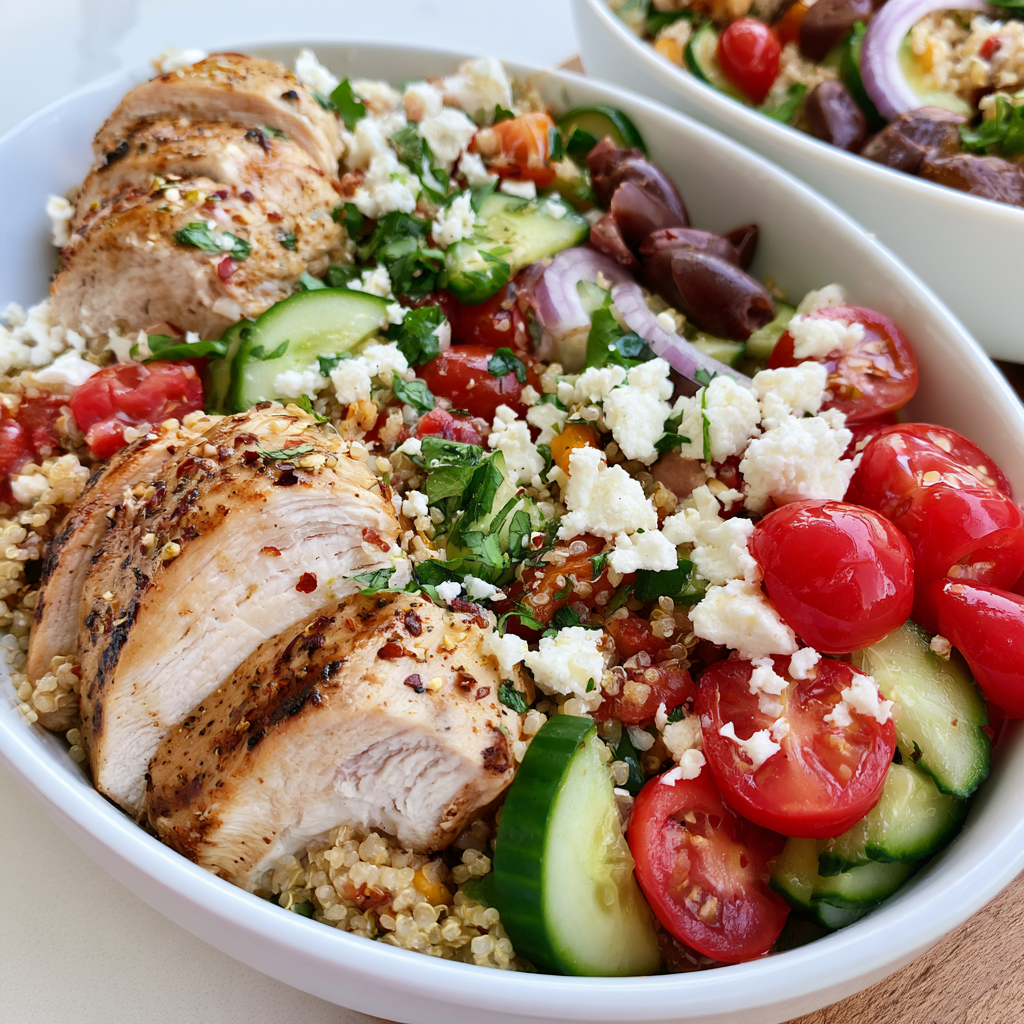
1. Mediterranean Grilled Chicken and Quinoa High-Protein Bowls
Timing:
- Prep time: 15 minutes
- Cook time: 10 minutes (assuming pre-cooked quinoa or quick-cook variety)
- Total time: 25 minutes
- Portions: 1 generous serving
Ingredients:
- For the Base:
- 1/2 cup quinoa, cooked (rinsed well before cooking to remove bitterness)
- For the Chicken:
- 5 oz boneless, skinless chicken breast
- 1 tsp olive oil
- 1/2 tsp dried oregano
- 1/4 tsp garlic powder
- Salt and cracked black pepper to taste
- For the Bowl Components:
- 1/4 cup cucumber, diced (English cucumbers preferred for less water)
- 5-6 cherry tomatoes, halved
- 5-6 Kalamata olives, pitted and halved
- 2 tbsp crumbled feta cheese
- 2 tbsp high-quality hummus
- The “Secret” Lemon-Herb Vinaigrette:
- 1 tbsp extra virgin olive oil
- 1 tsp fresh lemon juice
- 1/2 tsp fresh chopped parsley
- A pinch of dried oregano or sumac (for extra tang)
Instructions:
- Marinate and Cook Chicken: In a small bowl, rub the chicken breast with 1 tsp olive oil, dried oregano, garlic powder, salt, and pepper. Let it sit while you prep your veggies. Grill or pan-sear the chicken over medium-high heat for about 4-5 minutes per side until the internal temperature reaches 165°F (74°C). Let the chicken rest for 5 minutes before cubing it—this keeps the juices inside.
- Prepare the Quinoa Base: Ensure your quinoa is cooked and fluffy. For better flavor, fluff it with a fork and stir in a tiny pinch of salt or a teaspoon of fresh lemon zest while it’s still warm.
- Assemble the Vinaigrette: In a small jar or bowl, whisk together the 1 tbsp olive oil, lemon juice, fresh parsley, and a pinch of salt/pepper.
- Assemble the Bowl: Spoon the quinoa into your serving bowl. Layer the cubed chicken on top. Arrange the cucumber, tomatoes, olives, and feta in separate, colorful “zones” around the chicken.
- Finish: Add a dollop of hummus to the center or side. Drizzle your lemon-herb vinaigrette over the vegetables and chicken just before serving.
Serving Ideas and Pairings for High-Protein Bowls:
- Presentation Tip: To make it “restaurant style,” use a vegetable peeler to shave a few ribbons of cucumber and place them vertically in the bowl; it adds great visual height.
- Garnish: A pinch of sumac on the hummus adds a beautiful deep red color and a wonderful lemony zing.
- Drink Pairing: As mentioned, cucumber-infused sparkling water is excellent, but if you want to elevate it, try a chilled glass of crisp Sauvignon Blanc or an unsweetened iced tea with a slice of fresh lemon.
- Texture Boost: If you want a bit more crunch, toast a handful of pine nuts or slivered almonds and scatter them on top.
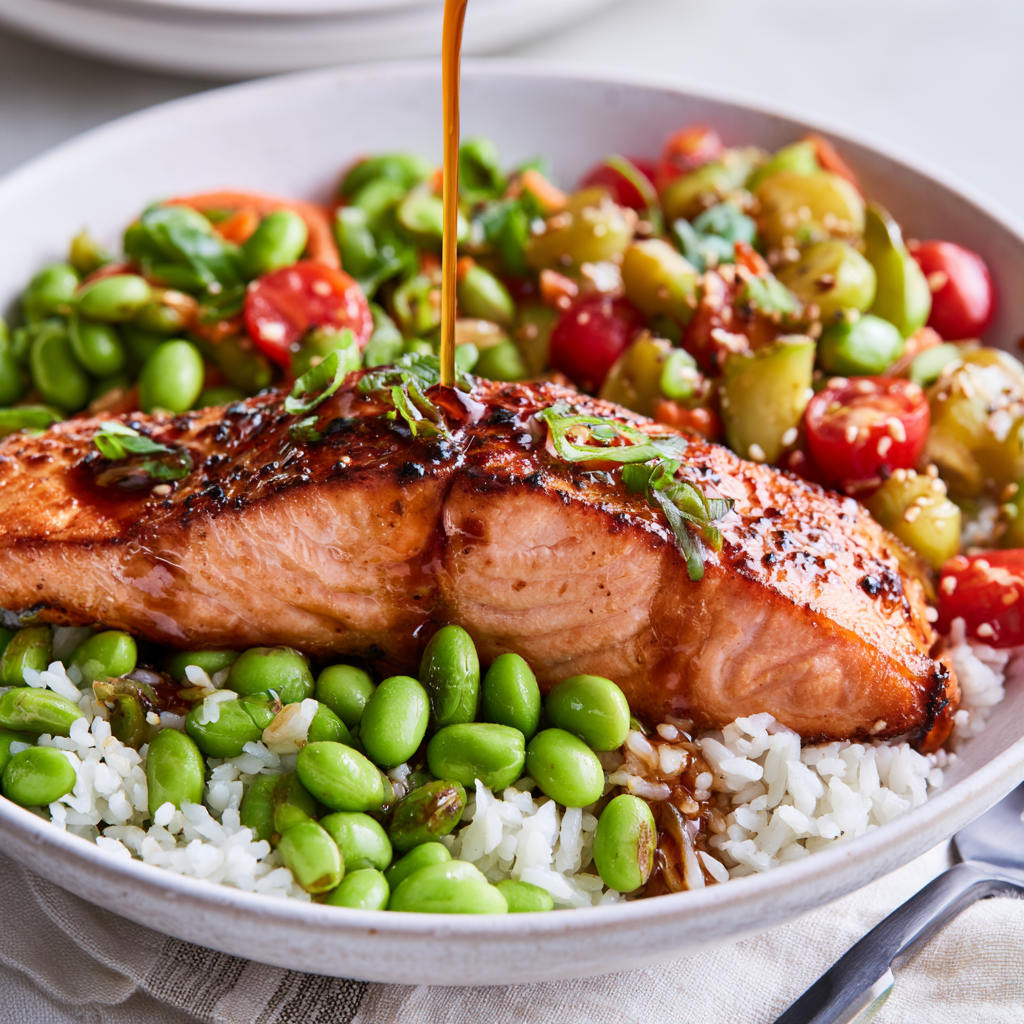
2. Salmon and Edamame “High-Protein Bowls”
Timing:
- Prep time: 10 minutes
- Cook time: 15 minutes
- Total time: 25 minutes
- Portions: 1 generous serving
Ingredients:
- For the Base:
- 1/2 cup cooked brown rice (short-grain brown rice is best for texture)
- For the Salmon:
- 4 oz fresh salmon fillet (skin removed)
- 1 tsp sesame oil (toasted is best for aroma)
- Salt and white pepper to taste
- For the Glaze/Dressing:
- 1 tbsp low-sodium soy sauce (or tamari for gluten-free)
- 1/2 tsp rice vinegar
- 1/2 tsp honey or maple syrup
- 1/2 tsp Sriracha (adjust to your heat preference)
- 1/4 tsp fresh grated ginger
- For the Bowl Components:
- 1/3 cup shelled edamame (thawed)
- 1/2 small avocado, sliced
- 1/4 cup red cabbage, thinly shredded
- 1 green onion, thinly sliced (for garnish)
- 1/2 tsp toasted sesame seeds
Instructions:
- Prepare the Salmon: Pat the salmon fillet dry with a paper towel. Rub it lightly with the sesame oil and a small pinch of salt and white pepper. Pan-sear in a non-stick skillet over medium heat for about 3–4 minutes per side, or until the salmon is opaque and flakes easily with a fork.
- Make the Glaze: In a small bowl, whisk together the soy sauce, rice vinegar, honey, Sriracha, and grated ginger until emulsified.
- Prepare the Base: Ensure your brown rice is hot. If you like, stir in a splash of rice vinegar while the rice is still warm to give it a sushi-rice tang.
- Assemble: Spoon the rice into your bowl. Place the warm salmon fillet on top and gently break it into large, flaky chunks. Arrange the edamame, avocado slices, and shredded red cabbage around the salmon.
- Finish: Drizzle the glaze evenly over the salmon and vegetables. Top with the sliced green onion and a generous sprinkle of toasted sesame seeds.
Serving Ideas and Pairings for High-Protein Bowls:
- Presentation Tip: To achieve the professional “layered” look, use a mandoline or a very sharp knife to shred the cabbage as thinly as possible—this makes it much easier to eat and creates a beautiful, lacy texture.
- Texture Boost: If you miss the crunch of fried toppings, add a teaspoon of crispy fried onions or crushed wasabi peas on top just before serving.
- Drink Pairing: This dish pairs beautifully with a chilled Junmai-style sake, or keep it non-alcoholic with a bright, unsweetened iced green tea brewed with a touch of lime.
- The “Pro” Trick: If you have time, let the salmon marinate in half of the glaze for 15 minutes before cooking, then use the other half as a finishing sauce.
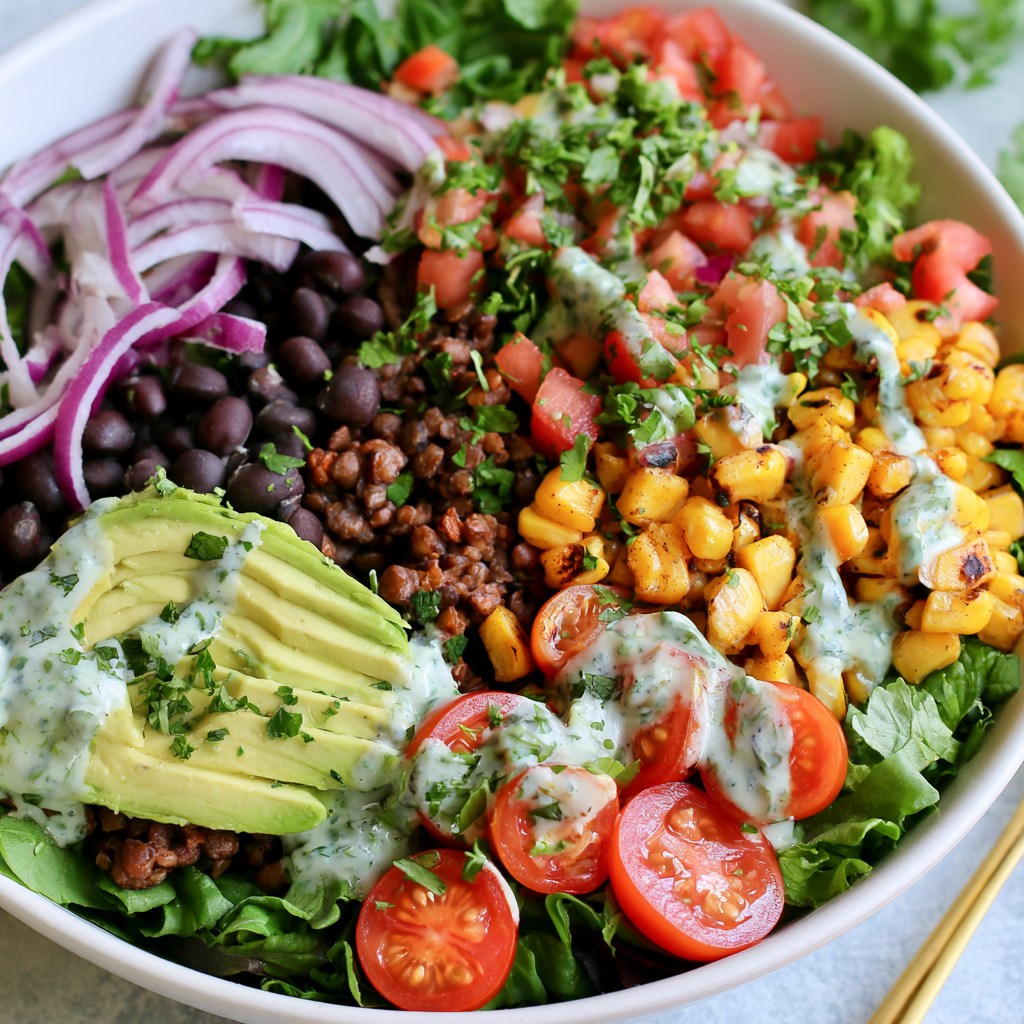
3. Zesty Southwest Lentil and Black Bean “High-Protein Bowls”
Timing:
- Prep time: 10 minutes
- Cook time: 5 minutes (if using pre-cooked beans/lentils)
- Total time: 15 minutes
- Portions: 1 generous serving
Ingredients:
- For the Base:
- 1/3 cup cooked quinoa (provides a complete protein)
- For the Protein Mix:
- 1/2 cup cooked brown lentils (canned is fine, rinsed and drained well)
- 1/3 cup black beans (canned, rinsed and drained)
- 1/2 tsp chili powder
- 1/4 tsp ground cumin
- A pinch of smoked paprika
- For the Cilantro-Lime Dressing:
- 1 tbsp Greek yogurt (or sour cream)
- 1 tbsp fresh cilantro, chopped finely
- 1/2 tbsp lime juice
- 1/4 tsp garlic powder
- Salt and pepper to taste
- For the Bowl Components:
- 1/4 cup corn kernels (roasted or charred, if possible)
- 1/4 cup cherry tomatoes, halved
- 1/4 red onion, finely diced
- 1 tbsp pepitas (pumpkin seeds) for crunch
Instructions:
- Season the Proteins: In a small skillet over medium heat, add the lentils, black beans, chili powder, cumin, and smoked paprika. Stir for 3–4 minutes until warmed through and fragrant. (Optional: add a splash of water if the mix looks too dry).
- Whisk the Dressing: In a small ramekin, combine the Greek yogurt, chopped cilantro, lime juice, garlic powder, salt, and pepper. If it is too thick, whisk in a teaspoon of water until it reaches a pourable consistency.
- Prepare the Base: Fluff your warm quinoa and place it into your serving bowl as the bottom layer.
- Assemble: Arrange the warm lentil and bean mixture over one side of the quinoa. On the remaining sides, cluster the charred corn, halved cherry tomatoes, and diced red onion.
- Finish: Drizzle the creamy cilantro-lime dressing generously over the top. Garnish with the pepitas for a necessary crunch.
Serving Ideas and Pairings For High-Protein Bowls:
- Presentation Tip: This bowl is highly colorful. Keep the components separated in distinct “quadrants” in the bowl before adding the dressing to showcase the contrast between the green cilantro, red tomatoes, and yellow corn.
- Texture Boost: If you enjoy extra heat, add a few slices of fresh jalapeño or a dash of your favorite hot sauce (cholula or chipotle-based sauces work best).
- Drink Pairing: A crisp, sparkling water with a heavy squeeze of lime or an iced hibiscus tea provides a refreshing contrast to the earthy, spiced beans.
- The “Pro” Trick: If you have extra time, lightly pickle the red onions in lime juice and salt for 20 minutes before serving. It cuts the raw bite of the onion and adds a beautiful pink hue to the dish.
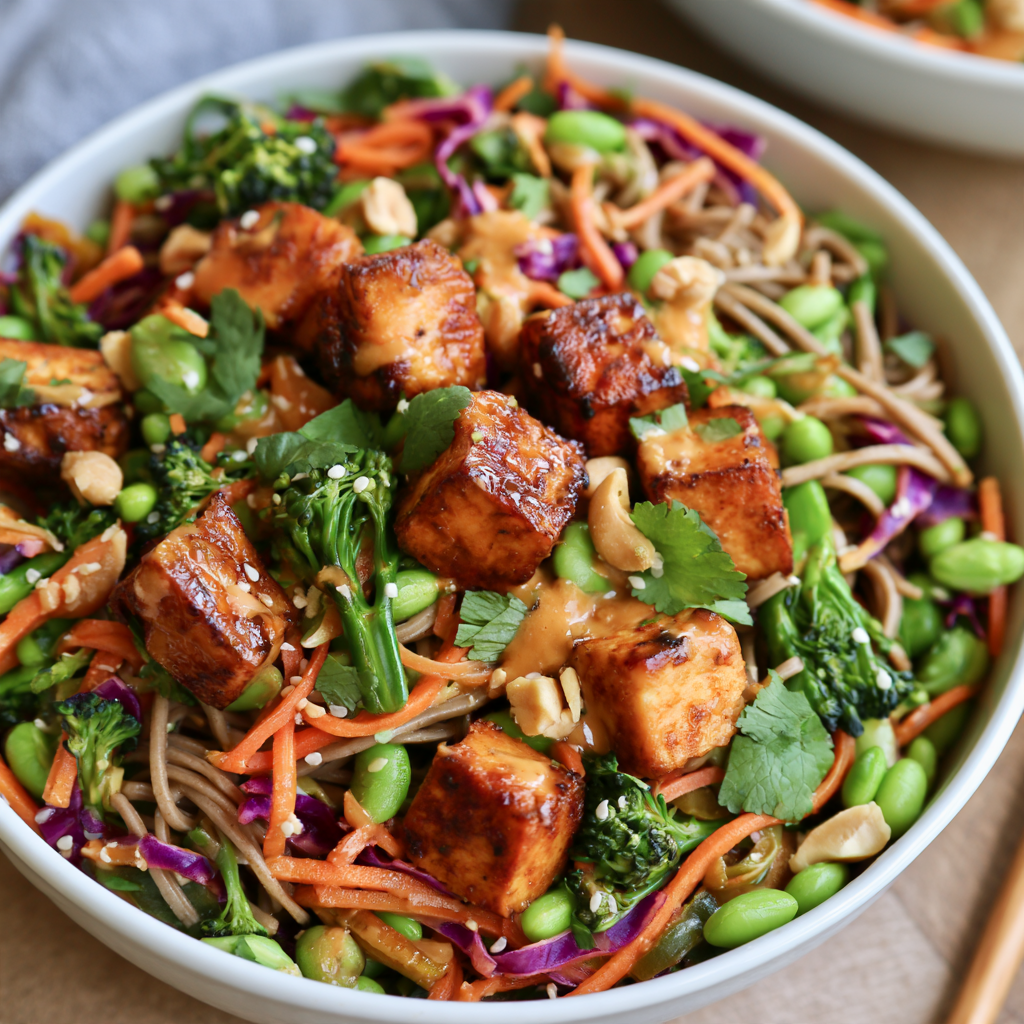
4. Spicy Peanut Tofu and Soba Noodle High-Protein Bowls
Timing:
- Prep time: 10 minutes
- Cook time: 10 minutes
- Total time: 20 minutes
- Portions: 1 generous serving
Ingredients:
- For the Base:
- 2 oz dried soba noodles (approx. 1 bundle)
- For the Protein:
- 4 oz extra-firm tofu, pressed and cubed
- 1 tsp sesame oil (for pan-searing)
- For the Spicy Peanut Dressing:
- 1 tbsp natural creamy peanut butter
- 1 tbsp low-sodium soy sauce
- 1/2 tbsp lime juice
- 1 tsp Sriracha or chili garlic sauce
- 1 tsp maple syrup or honey
- 1 tsp warm water (to thin)
- For the Bowl Components:
- 1/2 cup snap peas, halved
- 1/2 cup shredded carrots
- 1/4 cup cucumber, sliced into thin ribbons
- 1 tbsp crushed roasted peanuts (for garnish)
- 1 tsp black sesame seeds
Instructions:
- Prepare the Tofu: Wrap the tofu in a paper towel and press with a heavy object for 5-10 minutes to remove excess moisture. Cube the tofu and toss in a light coating of cornstarch (optional, for crispiness). Heat sesame oil in a non-stick skillet over medium-high heat. Sear tofu cubes until golden brown on all sides (about 5-7 minutes).
- Cook the Noodles: Bring a small pot of water to a boil. Cook soba noodles according to package instructions (usually 4-5 minutes). Drain and immediately rinse under cold water to stop the cooking and prevent sticking.
- Whisk the Sauce: In a small bowl, whisk together the peanut butter, soy sauce, lime juice, Sriracha, syrup, and warm water until smooth. If the sauce is too thick, add a teaspoon more water until it reaches a creamy, pourable consistency.
- Assemble: Place the cold soba noodles in the bowl. Arrange the warm seared tofu, snap peas, shredded carrots, and cucumber ribbons around the edges.
- Finish: Drizzle the spicy peanut dressing over the entire bowl. Garnish with the crushed peanuts and black sesame seeds.
Serving Ideas and Pairings For High-Protein Bowls:
- Presentation Tip: Use a vegetable peeler to create long, thin “ribbons” of cucumber—this mimics the shape of the noodles and makes the bowl look more elegant.
- Texture Boost: Add a handful of fresh cilantro or Thai basil leaves on top to cut through the richness of the peanut sauce with a burst of herbal brightness.
- Drink Pairing: A light, chilled jasmine tea complements the floral notes of the sesame and peanut flavors perfectly.
- The “Pro” Trick: If you want a bit more bite, add a teaspoon of fresh, grated ginger directly into the sauce.
5. Savory Steak and Sweet Potato “High-Protein Bowls”
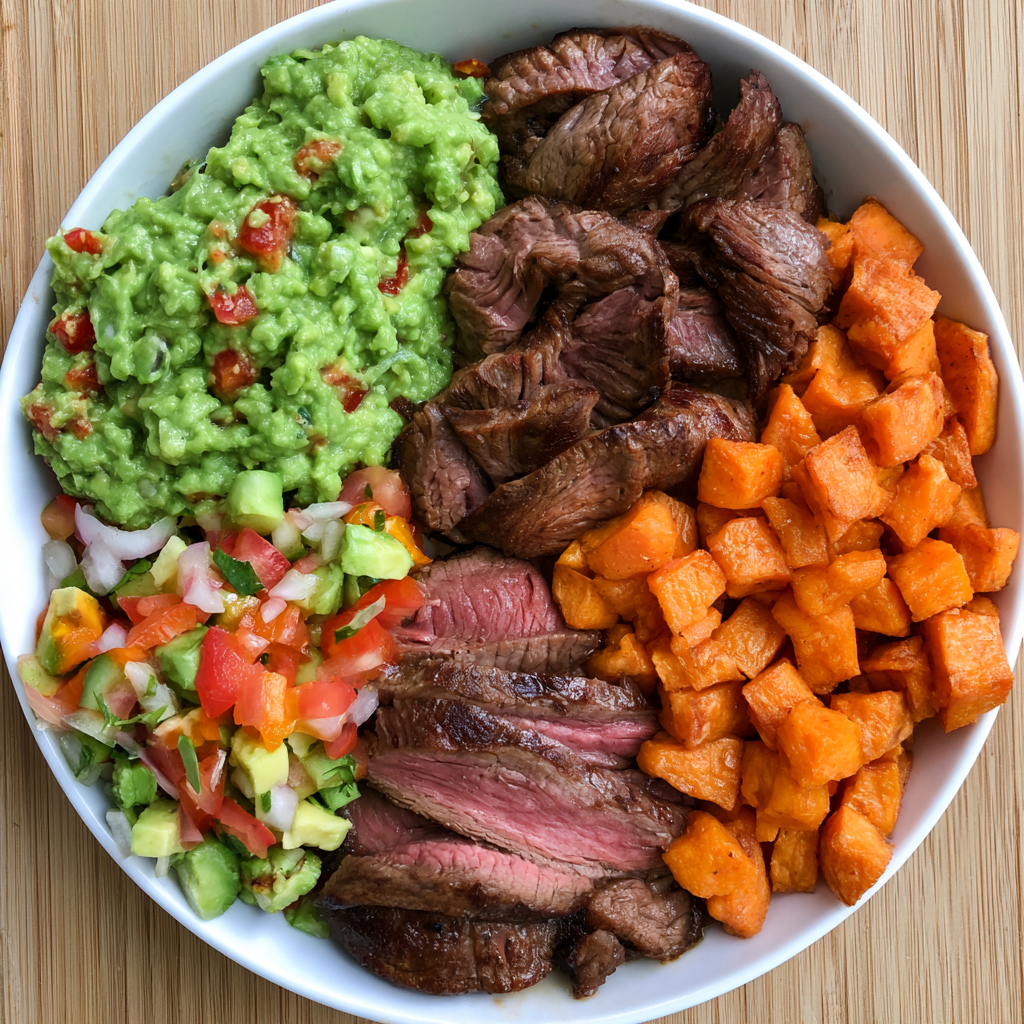
Timing for High-Protein Bowls:
- Prep time: 15 minutes
- Cook time: 20 minutes
- Total time: 35 minutes
- Portions: 1 generous serving
Ingredients for High-Protein Bowls:
- For the Base:
- 1 cup roasted sweet potato cubes (approx. 1/2 medium sweet potato)
- 1 cup fresh baby spinach or kale (raw)
- For the Protein:
- 4-5 oz lean sirloin or flank steak, sliced into strips
- 1/2 tsp olive oil
- Salt, black pepper, and garlic powder to taste
- For the Dressing:
- 1 tbsp balsamic vinegar
- 1 tsp Dijon mustard
- 1 tsp olive oil
- 1/2 tsp honey or maple syrup
- For the Bowl Components:
- 1/4 cup red bell pepper, diced
- 1/4 avocado, cubed
- 1 tbsp toasted sunflower seeds or walnuts (for crunch)
Instructions:
- Roast the Potatoes: Preheat oven to 400°F (200°C). Toss cubed sweet potatoes with a drizzle of olive oil, salt, and pepper. Roast for 20 minutes or until tender and slightly browned at the edges.
- Sear the Steak: While potatoes roast, season the steak strips with salt, pepper, and garlic powder. Heat olive oil in a skillet over high heat. Sear steak strips for 2–3 minutes per side until desired doneness (medium-rare is best for tenderness). Remove from heat immediately.
- Make the Dressing: In a small bowl, whisk together the balsamic vinegar, Dijon mustard, olive oil, and honey until smooth.
- Assemble: Create a bed of spinach or kale in your bowl. Add the warm roasted sweet potatoes and the seared steak strips. Top with the diced red bell peppers and avocado cubes.
- Finish: Drizzle the balsamic-dijon dressing over the warm components and garnish with the sunflower seeds or walnuts.
Serving Ideas and Pairings for High-Protein Bowls:
- Presentation Tip: When searing the steak, leave the strips undisturbed for the first minute to get a deep, dark crust—this adds significant flavor and visual appeal to the bowl.
- Texture Boost: If you enjoy a little extra bite, add a tablespoon of pickled red onions or fermented sauerkraut to the side of the bowl; the acidity balances the earthiness of the sweet potatoes.
- Drink Pairing: A glass of sparkling mineral water with a slice of lemon or a light, crisp Pinot Noir works wonderfully with the savory steak and sweet potato profile.
- The “Pro” Trick: If you want to save time, roast a larger batch of sweet potatoes at the beginning of the week. They reheat perfectly in a skillet or microwave and can be used for other meals.
If you are looking for more prep-friendly inspiration beyond these bowls, check out our favorite healthy bento box ideas
Frequently Asked Questions about High-Protein Bowls
Q: How long can I keep my High-Protein Bowls in the fridge?
High-Protein Bowls generally stay fresh for 3 to 4 days when stored in airtight containers. To maintain the best texture, store your dressing separately and add it only when you are ready to eat. If your bowl includes fresh greens or avocado, try to add those components right before serving to prevent wilting or browning.
Q: Are High-Protein Bowls effective for weight loss?
High-Protein Bowls are an excellent tool for weight management because protein helps increase satiety, keeping you fuller for longer and reducing the urge to snack between meals. By pairing lean protein with high-fiber vegetables and complex carbohydrates, you create a balanced, calorie-conscious meal that supports sustained energy levels throughout the day.
Q: Can I customize these High-Protein Bowls if I have dietary restrictions?
High-Protein Bowls are inherently flexible, making them easy to adapt to gluten-free, dairy-free, or vegan diets. For example, you can swap soba noodles for rice noodles to go gluten-free, or replace dairy-based yogurt dressings with a tahini or hummus-based sauce for a dairy-free alternative. Simply swap the protein source or grains while keeping the ratio of vegetables and healthy fats the same.
Q: Is it expensive to prep High-Protein Bowls for the week?
High-Protein Bowls can be very budget-friendly if you focus on seasonal produce and staple grains like rice, quinoa, or lentils. Buying proteins in bulk or using versatile ingredients—like roasting a large batch of sweet potatoes or cooking a full carton of eggs—significantly lowers the cost per serving compared to buying pre-made, store-bought lunches.
Q: Do these High-Protein Bowls require a lot of fancy equipment?
High-Protein Bowls are designed to be accessible, requiring only basic kitchen equipment like a sheet pan for roasting, a skillet for searing proteins, and a mixing bowl for your dressings. You do not need specialized tools to succeed; in fact, the simplicity of the assembly is one of the main reasons these bowls are so popular for busy home cooks.
For more delicious baking inspiration, come join us on Facebook at RyanRecipes. Follow us to stay updated with our latest creations and share your culinary adventures with our vibrant community!