
Discover the rich culinary heritage of Ireland through five classic Irish dishes that encapsulate the essence of traditional Irish cooking. Rooted in history and culture, these recipes reflect the warmth of Irish hospitality and the bounty of the Irish countryside. Each dish tells a story, showcasing the flavors and ingredients that have been cherished across generations.
From hearty stews simmered to perfection to delicious breads that pair beautifully with every meal, these recipes are not just food but a celebration of community and family. Whether you’re familiar with Irish cuisine or new to it, these classic dishes are perfect for anyone looking to embrace comfort food that nourishes both body and soul.
Recipe 1: Irish Beef Stew -Classic Irish Dishes
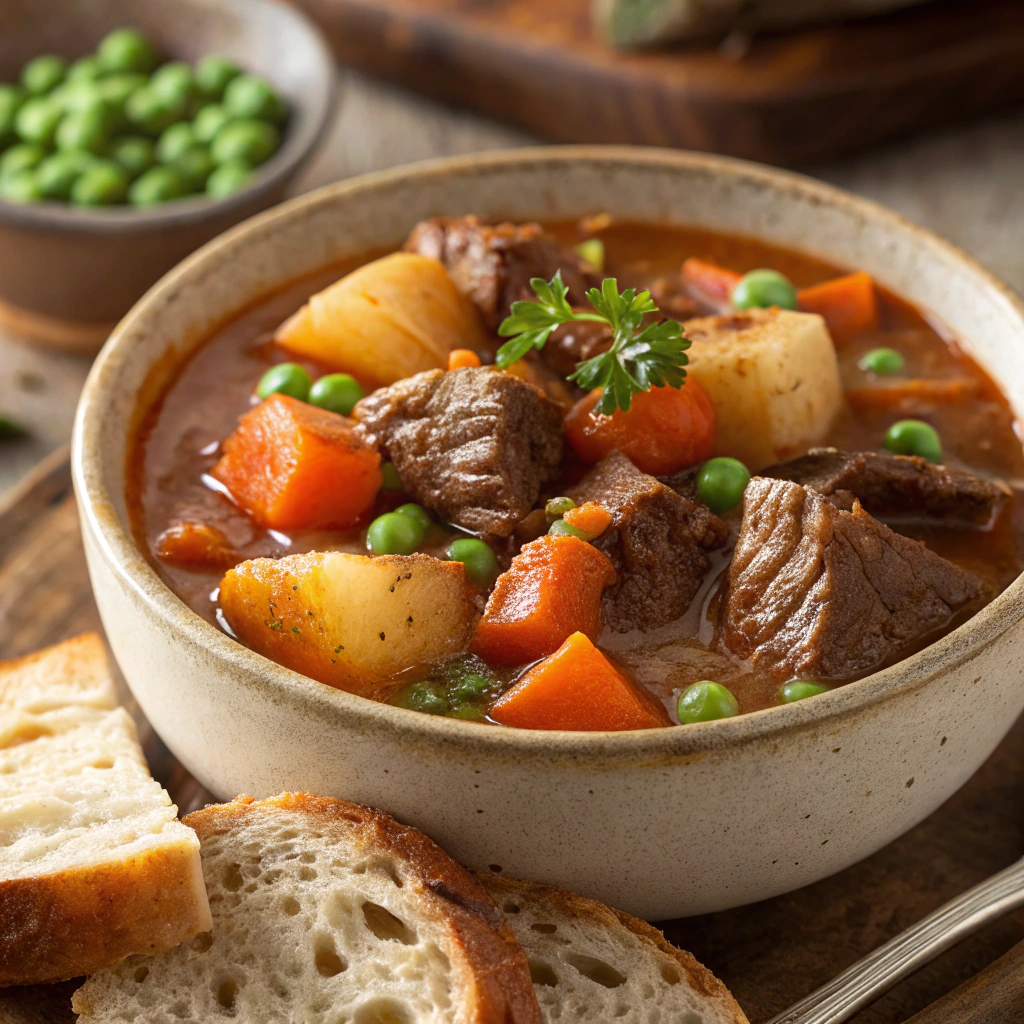
A hearty and warming beef stew, simmered with root vegetables and fragrant herbs, perfect for chilly evenings. This dish not only comforts but also nourishes, making it a beloved staple in Irish households. The slow cooking process allows the flavors to meld beautifully, resulting in tender chunks of beef and a rich, savory broth.
Ingredients For Classic Irish Dishes:
- 2 lbs beef chuck, cut into 1-inch cubes
- 4 medium potatoes, peeled and diced
- 3 carrots, sliced
- 2 onions, chopped
- 3 cloves garlic, minced
- 4 cups beef broth
- 2 tablespoons olive oil
- 2 teaspoons fresh thyme (or 1 teaspoon dried thyme)
- 1 teaspoon black pepper
- Salt to taste
- Optional: 1 tablespoon Worcestershire sauce for additional depth of flavor
Instructions For Classic Irish Dishes:
Step 1: Prepare the Ingredients
- Cube the Beef: Cut the beef chuck into 1-inch cubes, ensuring even pieces for uniform cooking.
- Chop the Vegetables: Peel and dice the potatoes, slice the carrots, chop the onions, and mince the garlic. This prep work will help streamline the cooking process.
Step 2: Sear the Beef
- Heat the Oil: In a large pot or Dutch oven, heat 2 tablespoons of olive oil over medium heat.
- Brown the Beef: Add the beef cubes in a single layer, making sure not to overcrowd the pot. Sear them for about 5-7 minutes, turning occasionally, until well-browned on all sides. This step enhances flavor through caramelization.
- Remove the Beef: Once browned, use a slotted spoon to remove the beef from the pot and set it aside on a plate.
Step 3: Sauté the Aromatics
- Add Onions and Garlic: In the same pot that you used for the beef (with the remaining oil and drippings), add the chopped onions and minced garlic. Sauté for about 3-4 minutes until the onions are translucent and fragrant, stirring occasionally to prevent burning.
Step 4: Combine Ingredients
- Return the Beef: Add the browned beef back into the pot with the sautéed onions and garlic.
- Add the Broth: Pour in 4 cups of beef broth, stirring to combine the ingredients. The liquid will help deglaze the pot, picking up any flavorful bits stuck to the bottom.
- Season the Stew: Add 2 teaspoons of fresh thyme (or 1 teaspoon of dried thyme), 1 teaspoon of black pepper, and Worcestershire sauce if using. Stir to incorporate the seasonings.
Step 5: Simmer the Stew
- Bring to a Boil: Increase the heat to high until the stew begins to boil.
- Reduce Heat and Cover: Once boiling, reduce the heat to low, cover the pot with a lid, and let it simmer gently for about 1 hour. This slow cooking allows the flavors to meld and the beef to become tender.
Step 6: Add Vegetables
- Incorporate Potatoes and Carrots: After the stew has simmered for 1 hour, carefully add the diced potatoes and sliced carrots to the pot.
- Continue to Simmer: Stir gently to combine. Cover the pot again and simmer for an additional 30-40 minutes, or until the potatoes, carrots, and beef are fork-tender.
Step 7: Final Seasoning
- Taste and Adjust: Once the vegetables are cooked, taste the stew and adjust the seasoning with salt and additional black pepper as needed.
Step 8: Serve the Stew
- Prepare for Serving: Ladle the Irish Beef Stew into bowls while it’s hot. You can garnish with fresh parsley if desired for added color and flavor.
- Enjoy: Serve the stew with thick slices of crusty soda bread and a pint of Irish stout for a classic Irish meal that warms the heart.
Serving Ideas and Pairings For Classic Irish Dishes:
Serve the stew hot with thick slices of crusty soda bread and a pint of Irish stout. This pairing enhances the hearty flavors while making for a satisfying meal that warms the soul.
Recipe 2: Shepherd’s Pie-Classic Irish Dishes
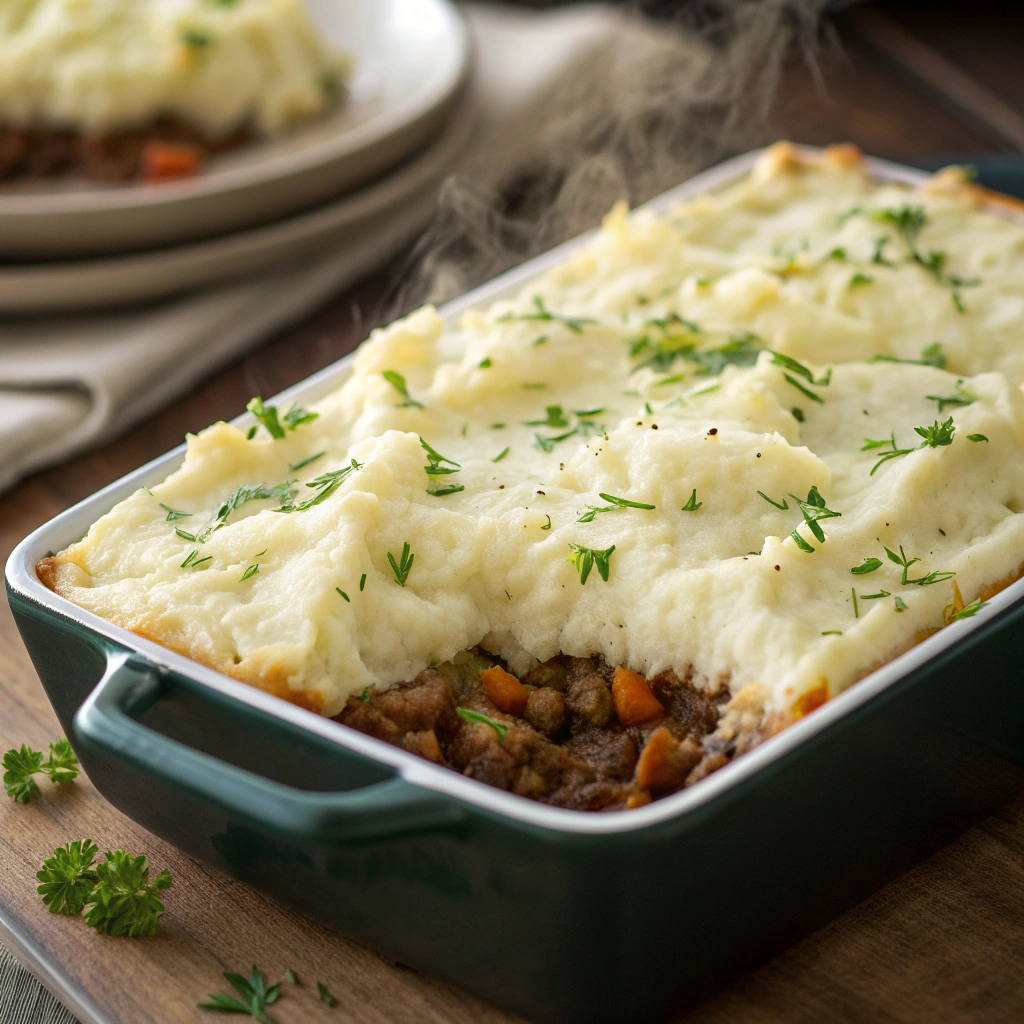
A comforting casserole made with minced lamb or beef, sautéed with vegetables and topped with creamy mashed potatoes. This classic dish, known for its hearty layers and savory flavors, is perfect for family gatherings or a cozy dinner at home.
Ingredients For Classic Irish Dishes:
- 1 lb minced lamb (or beef)
- 2 onions, chopped
- 2 carrots, diced
- 1 cup peas (fresh or frozen)
- 4 cups mashed potatoes (prepared from about 2 lbs potatoes)
- 1 tablespoon olive oil
- 1 tablespoon tomato paste
- 1 cup beef or vegetable broth
- 1 teaspoon dried rosemary
- Salt and pepper to taste
Instructions For Classic Irish Dishes:
- Preheat your oven to 400°F (200°C).
- In a large skillet, heat olive oil over medium heat. Add the onions and carrots, sautéing until soft.
- Stir in the minced lamb, cooking until browned. Drain excess fat if necessary.
- Add the tomato paste, broth, rosemary, salt, and pepper. Simmer for about 10 minutes.
- Stir in the peas and remove from heat.
- Spoon the meat mixture into a baking dish, then spread the mashed potatoes over the top, smoothing out with a spatula.
- Use a fork to create a pattern on the mashed potatoes for added texture.
- Bake for 25-30 minutes, or until the top is golden brown.
Serving Ideas and Pairings For Classic Irish Dishes:
Pair the Shepherd’s Pie with a fresh garden salad and a glass of red wine. The crispness of the salad balances the richness of the pie, creating a well-rounded meal.
Recipe 3: Colcannon-Classic Irish Dishes
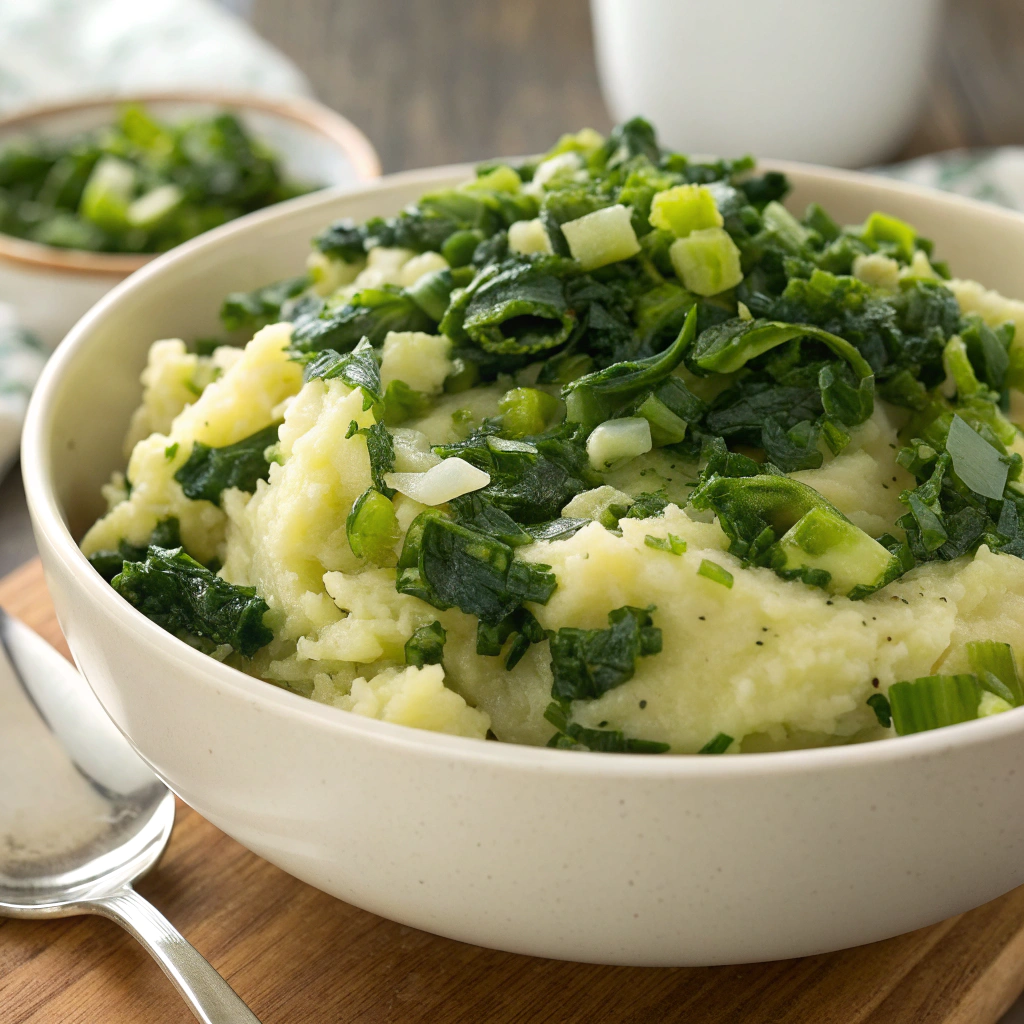
Colcannon is a traditional Irish dish of creamy mashed potatoes mixed with sautéed kale or cabbage, infused with butter and cream. This rich and satisfying recipe is a favorite comfort food, often enjoyed during colder months. The combination of flavors and textures provides warmth and nourishment, making it a cherished dish in Irish homes.
Ingredients For Classic Irish Dishes:
- 2 lbs potatoes, peeled and quartered
- 2 cups kale or cabbage, chopped
- 4 tablespoons butter
- ½ cup heavy cream
- 4 green onions, finely sliced
- Salt and pepper to taste
Instructions For Classic Irish Dishes:
- Prepare and Boil the Potatoes:
- Start by peeling the potatoes and cutting them into quarters for even cooking. Place the potatoes in a large pot and cover them with cold water, adding a generous pinch of salt. Bring the water to a boil over high heat.
- Once boiling, reduce to a simmer and cook the potatoes until they are tender when pierced with a fork, approximately 15 minutes.
- Sauté the Greens:
- While the potatoes are boiling, take a separate pot and melt 1 tablespoon of butter over medium heat. Add the chopped kale or cabbage, stirring frequently.
- Sauté the greens for about 5-7 minutes until they are wilted and tender. If using kale, you may need to cook a few minutes longer until it is soft.
- Once cooked, remove from heat and set aside.
- Mash the Potatoes:
- Once the potatoes are tender, drain them thoroughly in a colander and return them to the pot (off the heat). This allows any excess moisture to evaporate, resulting in a creamier mash.
- Add the remaining 3 tablespoons of butter, heavy cream, salt, and freshly cracked black pepper to the potatoes. Use a potato masher or a hand mixer to mash until smooth and creamy. Avoid over-mashing, as this can make the potatoes gluey.
- Combine and Season:
- Gently fold in the sautéed greens and the finely sliced green onions into the mashed potatoes. Stir until everything is well combined, ensuring the greens are evenly distributed throughout the mixture.
- Taste and adjust the seasoning with more salt and pepper if necessary.
- Serve Warm:
- Transfer the Colcannon to a serving bowl, making a small well in the center if desired. For an authentic touch, you can melt a small pat of butter in the center of the Colcannon just before serving.
- This dish is best served warm and can be enjoyed immediately.
Serving Ideas and Pairings For Classic Irish Dishes:
Colcannon is versatile and can be served alongside traditional Irish dishes such as corned beef or alongside roasted meats like chicken or pork. It also stands alone as a hearty vegetarian option. For a creative twist, try topping it with a fried or poached egg for a delicious breakfast or brunch experience.
This classic Irish dish brings together simplicity and flavor, embodying the essence of comfort food. Whether it’s a family dinner or a holiday gathering, Colcannon is sure to delight all who partake in its creamy goodness.serve it as a main dish topped with a fried egg for a hearty meal that showcases simple, rustic flavors.
Recipe 4: Irish Soda Bread-Classic Irish Dishes
Overview:
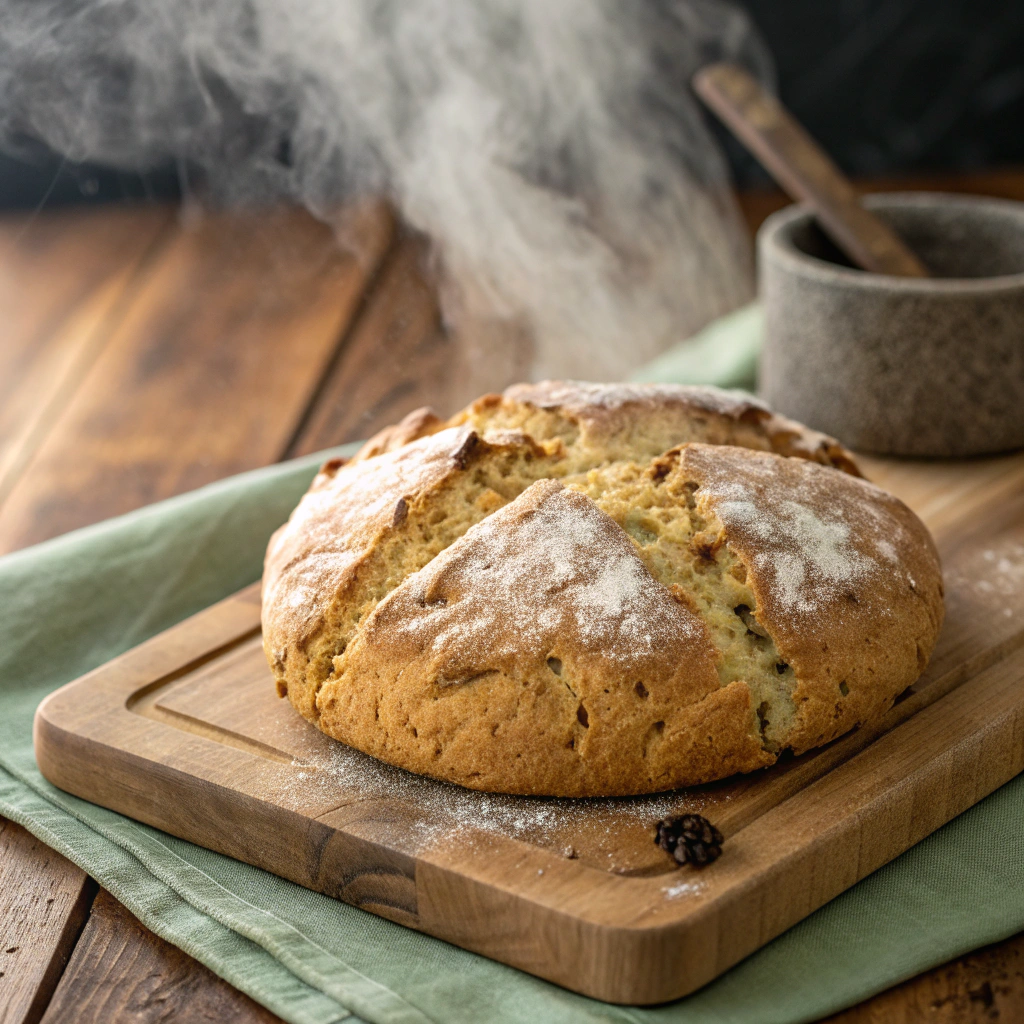
Irish Soda Bread is a simple, no-yeast bread that is both crusty on the outside and soft on the inside. This quick bread, traditionally made with just a few basic ingredients, is perfect for every meal and embodies the essence of Irish baking. It’s easy to prepare and requires minimal time, making it a staple in many Irish homes.
Ingredients:
- 4 cups all-purpose flour
- 1 teaspoon baking soda
- 1 teaspoon salt
- 1 ½ cups buttermilk
- 2 tablespoons sugar (optional, for a hint of sweetness)
Instructions:
- Preheat your oven to 425°F (220°C). Grease a baking sheet or line it with parchment paper.
- In a large bowl, whisk together the flour, baking soda, salt, and sugar if using.
- Make a well in the center of the dry ingredients and pour in the buttermilk.
- Using your hands or a wooden spoon, mix until a sticky dough forms. Be careful not to overmix.
- Turn the dough out onto a floured surface and gently knead it for about 1 minute until it comes together. Shape it into a round loaf.
- Place the loaf on the prepared baking sheet. Use a sharp knife to cut a deep cross on top of the dough; this helps with even baking.
- Bake for 30-35 minutes or until the bread is golden brown and sounds hollow when tapped on the bottom.
- Allow to cool slightly before slicing.
Serving Ideas and Pairings For Classic Irish Dishes:
Serve warm slices of Irish Soda Bread with butter and jam, or enjoy alongside hot soups and stews for a complete meal. Its adaptability makes it an excellent accompaniment to almost any dish.
Recipe 5: Barmbrack- Classic Irish Dishes
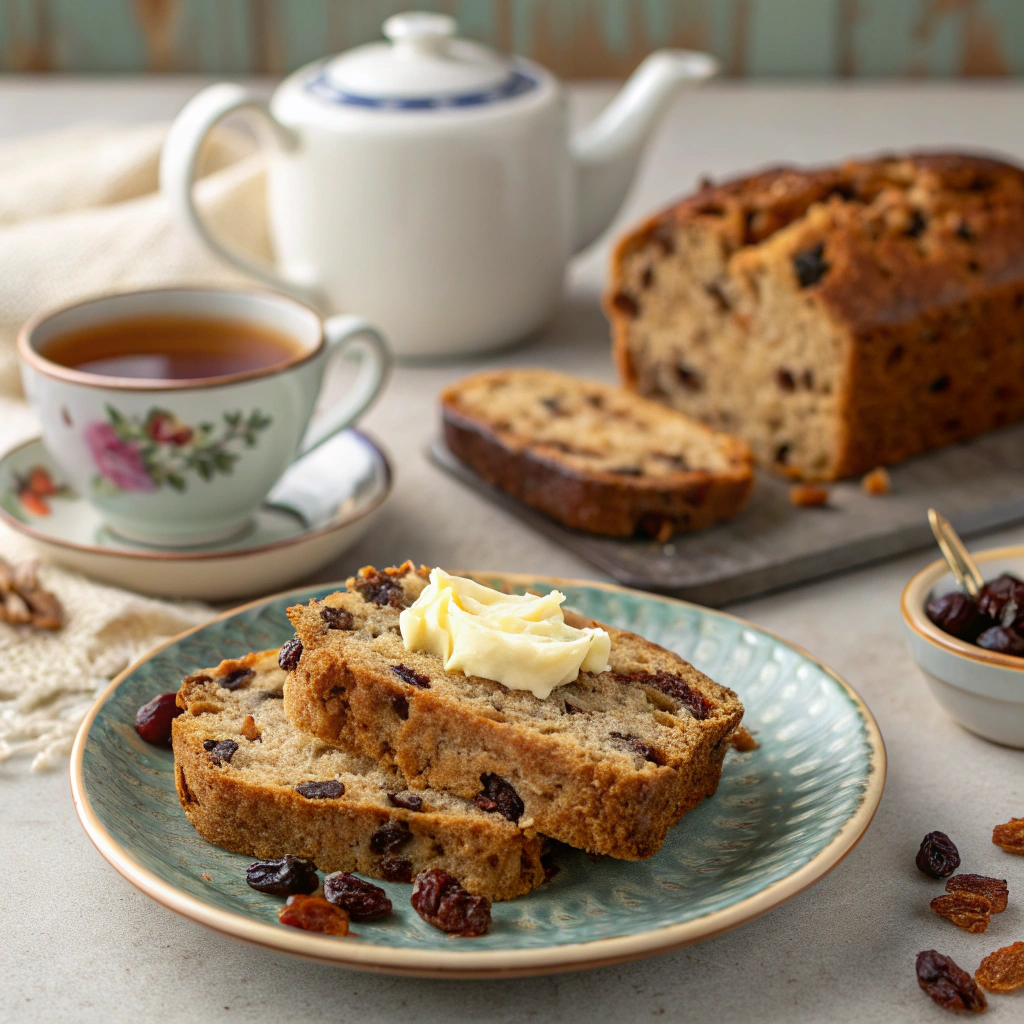
Barmbrack is a delightful sweet bread enriched with dried fruits and spices, frequently enjoyed with a cup of tea. Traditionally served during Halloween, this festive loaf has become a cherished treat throughout the year. Its moist texture and rich flavor make it perfect for snacks or dessert.
Ingredients:
- 2 cups mixed dried fruit (such as raisins, currants, sultanas, and chopped candied peel)
- 1 ½ cups strong tea, brewed and cooled
- 3 cups all-purpose flour
- 1 teaspoon baking powder
- ½ teaspoon baking soda
- ½ teaspoon cinnamon
- ½ cup sugar
- 1 egg, beaten
- 4 tablespoons melted butter
Instructions:
- In a bowl, combine the dried fruit and brewed tea, soaking for at least 2 hours or overnight to plump the fruit.
- Preheat your oven to 350°F (175°C) and grease a loaf pan.
- In a large bowl, mix the flour, baking powder, baking soda, cinnamon, and sugar together.
- Add the soaked fruit mixture, beaten egg, and melted butter to the flour mix. Stir until just combined.
- Pour the batter into the prepared loaf pan, smoothing the top.
- Bake for 50-60 minutes, or until a skewer inserted into the center comes out clean.
- Allow to cool in the pan for 10 minutes before transferring to a wire rack to cool completely.
Serving Ideas and Pairings For Classic Irish Dishes:
Serve slices of Barmbrack warm or at room temperature with butter and a cup of Irish tea for a delightful afternoon snack. For a special treat, enjoy it with a dollop of cream cheese or a sprinkle of cinnamon sugar.
If you’re planning a festive meal, our St. Patrick’s Day Dinner Recipes feature an array of hearty options to complement these classic Irish dishes.
FAQs about Classic Irish Dishes
- What are some traditional ingredients used in Irish cooking?
Traditional Irish cooking often features ingredients such as potatoes, root vegetables (like carrots and onions), lamb, beef, cabbage, and seasonal greens. Dairy products, particularly butter and buttermilk, are also staples in many recipes. - Are classic Irish dishes healthy?
Many classic Irish dishes can be quite healthy, as they often incorporate wholesome ingredients like vegetables, lean meats, and whole grains. However, some dishes may be richer due to the use of butter or cream. Moderation and balance are key when enjoying these hearty meals. - What is the significance of soda bread in Irish culture?
Soda bread is a staple in Irish cuisine, symbolizing hospitality and simplicity. Its quick preparation (no yeast required) made it an ideal food for everyday life. Traditionally, it is often served with meals and used to soak up gravies and sauces. - What are some popular Irish desserts?
Besides Barmbrack, other popular Irish desserts include Irish cream cheesecake, apple tart, and bread pudding. These desserts often incorporate local flavors and ingredients, providing a sweet ending to a hearty meal. - Can I find modern twists on classic Irish dishes?
Yes! Many chefs and home cooks are creatively reinterpreting classic Irish dishes by incorporating contemporary ingredients or techniques. For example, you might find vegan or gluten-free versions of Shepherd’s Pie, or new spice blends added to traditional stews for an exciting twist. - What occasions are classic Irish dishes typically served?
Classic Irish dishes are often served during festive occasions like St. Patrick’s Day, family gatherings, and holidays. They are also popular during colder months when a warm, comforting meal is most appreciated. - Is Shepherd’s Pie always made with lamb?
While traditional Shepherd’s Pie is made with minced lamb, many people use ground beef (in which case it is technically called “Cottage Pie”). The choice often depends on personal preference and regional variations.
Final Thoughts on Classic Irish Dishes
Classic Irish dishes hold a special place in culinary traditions, offering comfort and warmth that transcends generations. From the hearty depths of Irish Beef Stew to the creamy goodness of Colcannon, each recipe encapsulates the rich flavors and wholesome ingredients celebrated in Ireland’s vibrant culture.
These beloved dishes not only nourish the body but also bring people together, making them ideal for family gatherings and festive occasions. The simplicity of ingredients, such as potatoes, root vegetables, and tender meats, highlights the beauty of Irish cooking, where each meal tells a story of heritage and tradition.
After enjoying these classic Irish dishes, don’t miss out on our delicious St. Patrick’s Day Desserts to satisfy your sweet tooth!
For more delicious recipes and baking inspiration, come join us on Facebook at RyanRecipes. Follow us to stay updated with our latest creations and share your culinary adventures with our vibrant community!