

Chicken rotisserie is a beloved cooking method that combines simplicity with exceptional flavor. This technique involves cooking a whole chicken evenly on a rotating spit, allowing the meat to baste itself in its own juices while developing a crispy, golden-brown skin. Its succulent, tender texture makes it an appealing choice for breakfast, lunch, or dinner, and it’s incredibly versatile—perfect for a casual family meal, a weekend barbecue, or even entertaining guests.
Not only does chicken rotisserie deliver irresistible taste, but it also offers a healthier alternative to frying, as the slow rotation helps excess fat drip away. Whether cooked in a professional rotisserie oven or at home on your grill, this method is sure to become a staple in your culinary repertoire.
Why Choose This chicken rotisserie Recipe
Opting for chicken rotisserie is a decision driven by flavor, health benefits, and ease of preparation. The slow, continuous rotation ensures even cooking and enhances the meat’s natural juiciness, resulting in a tender and flavorful outcome that’s difficult to match with other methods. It’s a healthier choice because excess fats and oils are rendered out during the process, leading to a reduced-fat, lower-calorie dish without sacrificing taste.
Moreover, rotisserie chicken is culturally significant in many cuisines, from American barbecue pits to Mediterranean rotisserie shops, adding a touch of tradition and authenticity to your table. For home cooks, it’s also straightforward—requiring minimal active prep time, making it an ideal dish even for beginners. Its versatility allows it to be served hot or cold, sliced for sandwiches, shredded for salads, or as a main course paired with a variety of sides.
Ingredients For chicken rotisserie and How to Choose Them

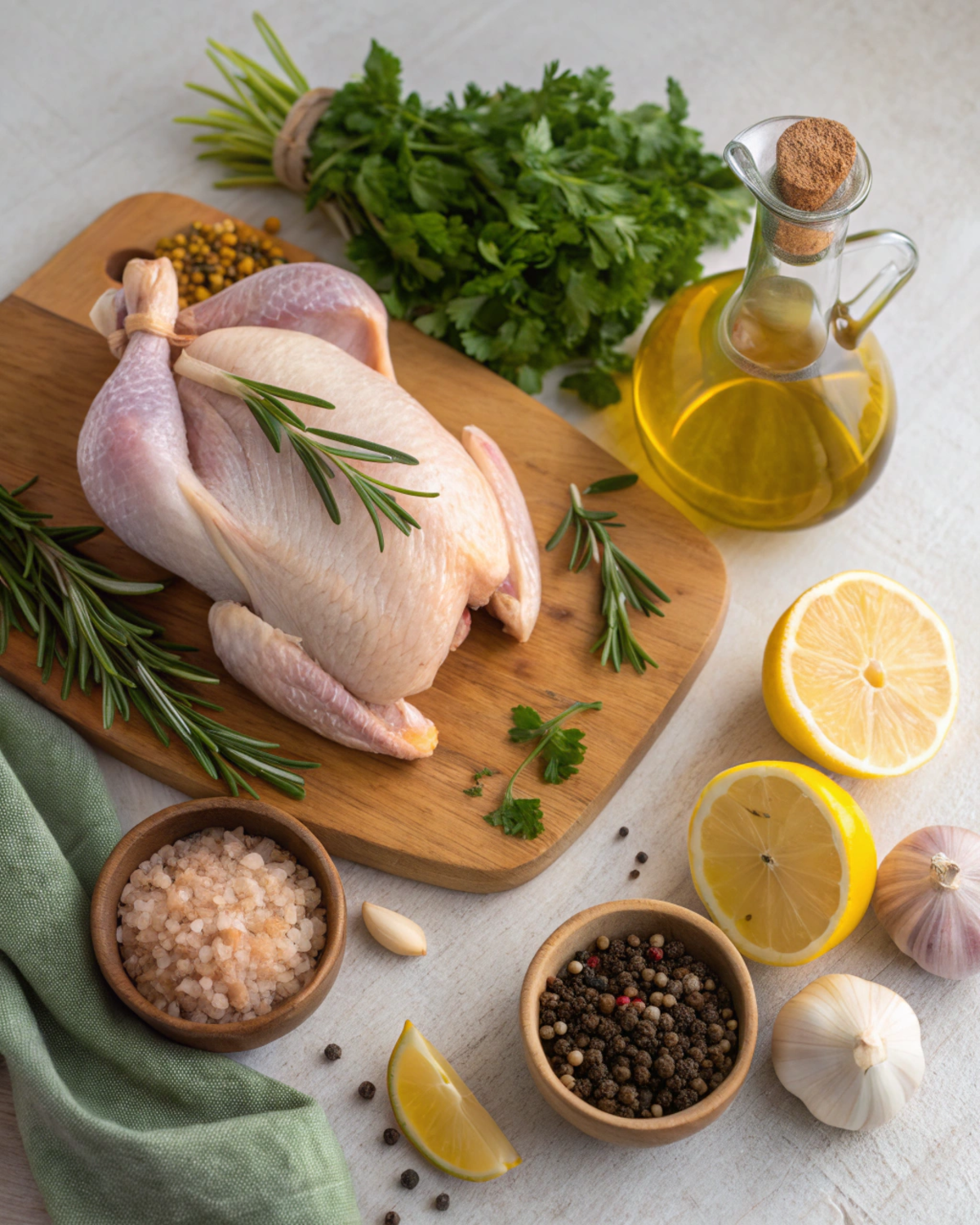
To prepare a perfect chicken rotisserie, selecting high-quality ingredients is essential. Here’s what you’ll need:
- Whole Chicken: Aim for a fresh, high-quality bird weighing between 4 to 5 pounds. Fresh chicken produces more flavorful and moist meat. Look for chicken with firm, plump flesh, bright, clear skin without discoloration or excessive pre-packaged juices.
- Herbs and Spices: Common choices include garlic, rosemary, thyme, paprika, salt, pepper, and lemon. Fresh herbs provide vibrant flavor, but dried herbs work well too; just reduce quantity slightly.
- Marinade or Rub (Optional): Olive oil, lemon juice, vinegar, honey, or soy sauce can add flavor and aid in browning.
- Bakery or Spit (for grilling): If grilling or using an outdoor rotisserie, ensure your skewer or spit can support the weight of the chicken evenly.
Tips for Selecting Ingredients:
- For a more tender chicken, opt for organic or free-range options—they often have better flavor and texture.
- Use fresh herbs and spices for a more aromatic finish.
- If unavailable, dried herbs are an acceptable substitute but adjust quantities accordingly.
Substitutions and Variations:
- For a healthier twist, skip the marinade and simply season with herbs and spices.
- To accommodate dietary restrictions, consider using low-sodium seasoning blends or spice mixes without added sugars.
Step-by-Step Preparation of chicken rotisserie Recipe
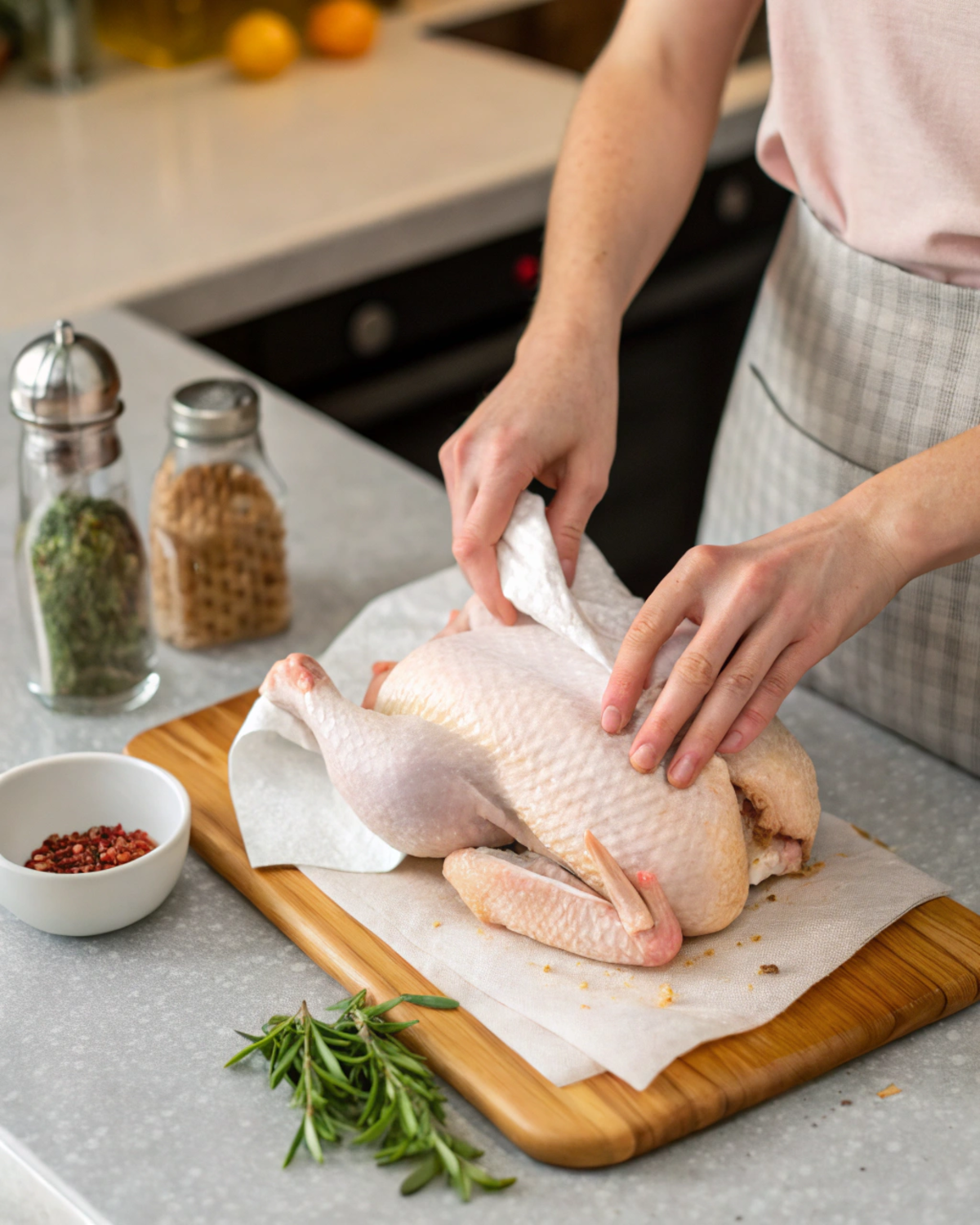
- Preparation of the Chicken:
- Remove the chicken from packaging, and pat dry thoroughly with paper towels to ensure crispy skin.
- Remove any excess fat or giblets from the cavity.
- Seasoning and Marinating:
- Mix herbs, spices, and optional liquids (like lemon juice or olive oil) to create a rub or marinade.
- Rub the mixture generously over the entire chicken, including inside the cavity.
- For enhanced flavor, let the chicken marinate in the refrigerator for 1-4 hours.
- Preparing the Rotisserie Setup:
- Securely skewer the chicken on the spit, ensuring it’s balanced to prevent wobbling.
- Tighten the clamps to keep the chicken stable throughout cooking.
- Cooking:
- Preheat your rotisserie or grill to medium heat (around 350°F or 175°C).
- Place the spit onto the rotisserie system.
- Cook the chicken for approximately 1.5 to 2 hours, depending on size. The internal temperature should reach 165°F (74°C).
- Keep an eye on the heat, adjusting vents or burners as needed to maintain a consistent temperature.
- Checking for Doneness:
- Use a meat thermometer inserted into the thickest part of the thigh without touching the bone.
- Confirm that the juices run clear when pierced.
- Resting and Serving:
- Remove the chicken from the spit and let it rest for about 10 minutes before carving.
- Carve and serve hot, ensuring maximum juiciness and flavor.
- Common pitfalls to avoid
- include overloading the spit, which can cause uneven cooking, or rushing the process by cooking at too high a temperature, resulting in burnt skin and undercooked interior.
- Maintaining a consistent temperature and ensuring the chicken is properly balanced on the spit are key to achieving perfect rotisserie chicken.
Tips for Perfecting Your Chicken Rotisserie Recipe
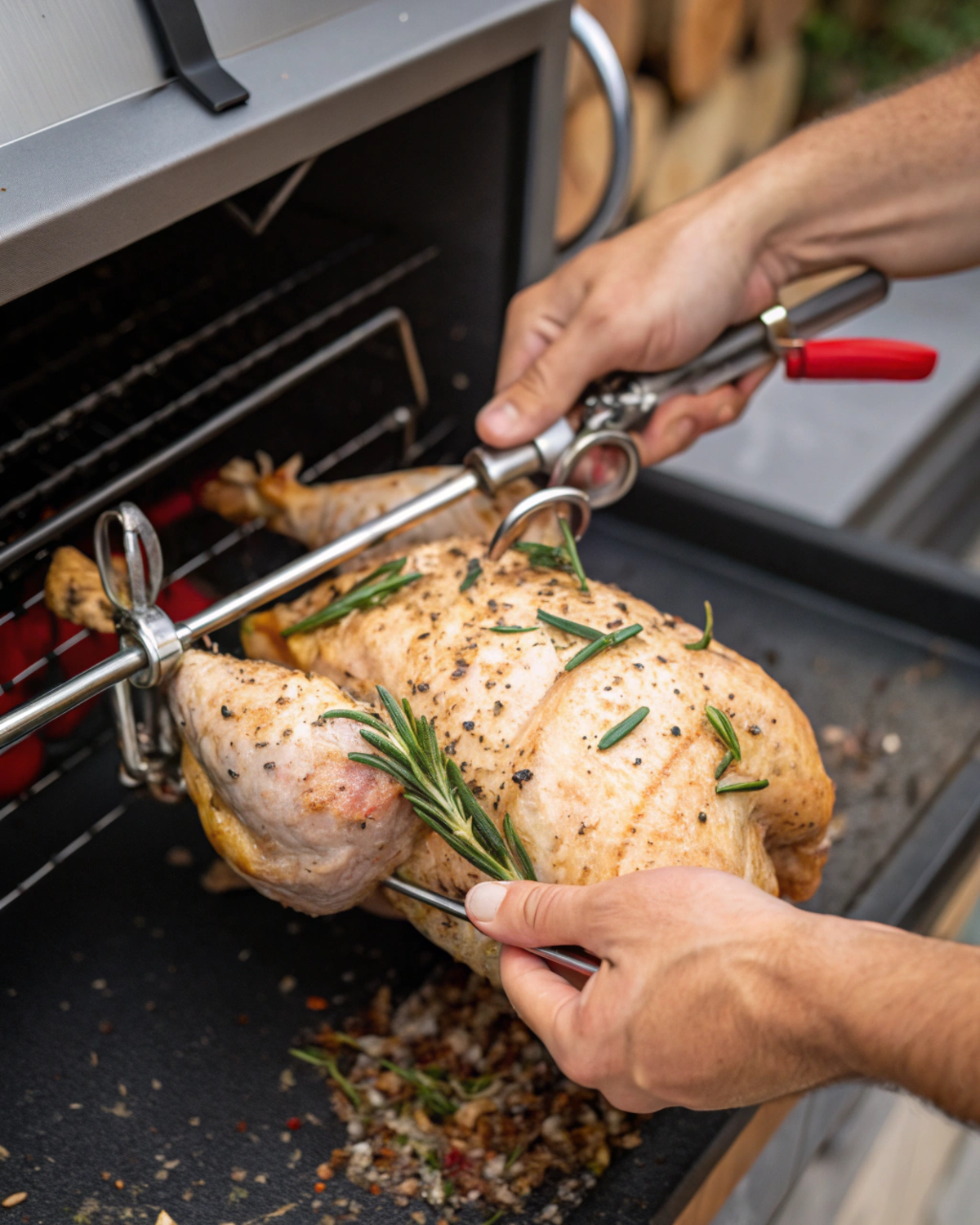
1. Ensure Optimal Spit Balance:
Carefully position and secure the chicken on the spit to achieve perfect balance. An evenly balanced load prevents wobbling, ensuring uniform rotation and even cooking from every angle.
2. Preheat Your Equipment Thoroughly:
Preheat your rotisserie or grill to the target temperature before adding the chicken. A properly heated surface guarantees immediate, consistent heat exposure, resulting in crispy skin and tender meat.
3. Dry the Chicken for Crispy, Delicious Skin:
Pat the chicken dry with paper towels both inside and out before seasoning. Removing excess moisture is key to achieving a golden, crispy exterior while locking in succulent juices.
4. Use a Reliable Meat Thermometer:
Always verify doneness with an accurate meat thermometer inserted into the thickest part of the thigh or breast. Aim for an internal temperature of 165°F (74°C). This guarantees perfectly cooked chicken every time, avoiding dryness or undercooking.
5. Maintain Steady, Even Heat:
Adjust the vents, burners, or heat sources as needed to keep a stable temperature throughout the cooking process. Consistent heat is crucial for evenly cooked, juicy chicken with a crispy skin.
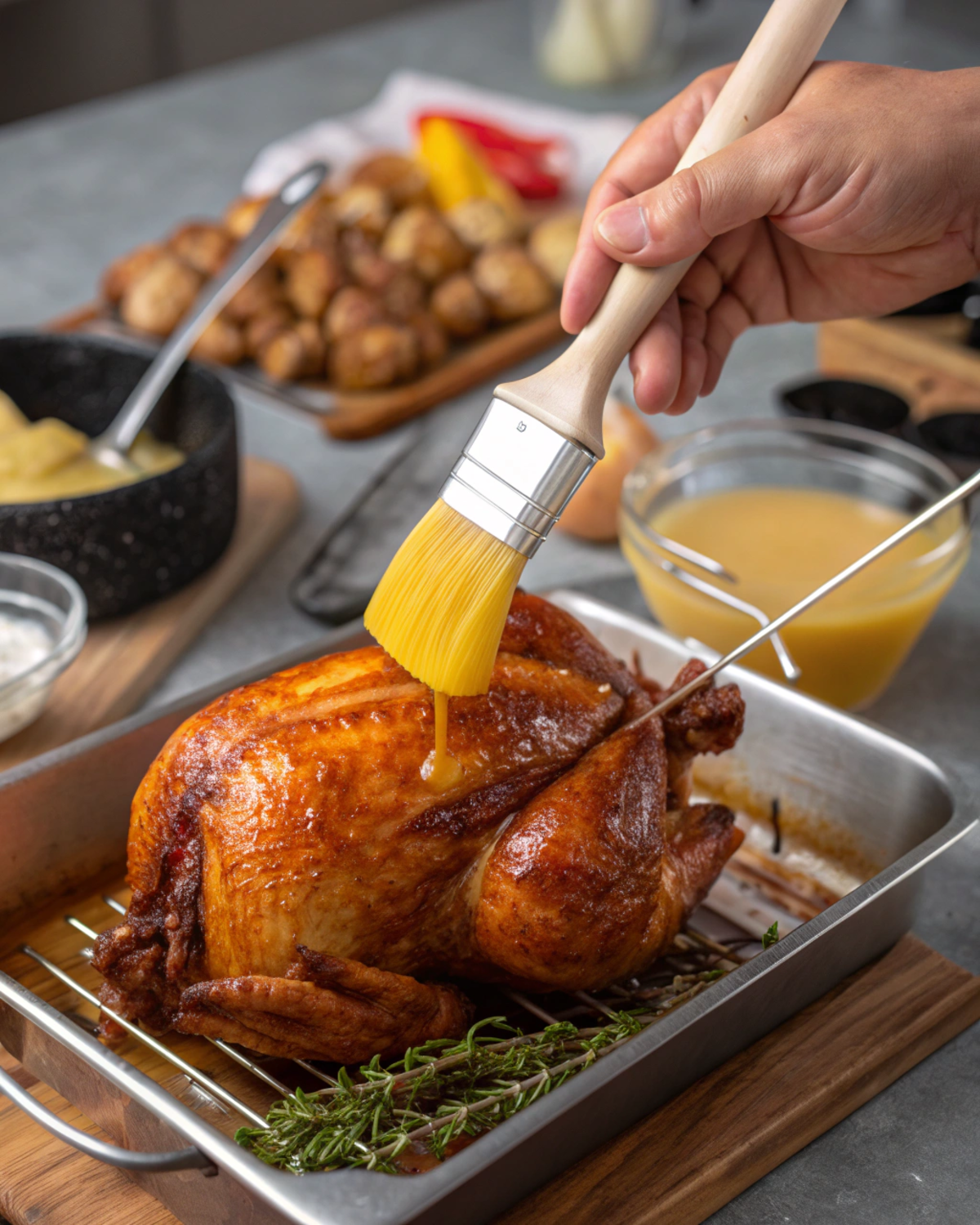
6. Baste for Enhanced Flavor and Moisture:
Periodically brush the chicken with melted butter, oil, or flavorful marinade during cooking. Basting promotes rich browning, extra juiciness, and an irresistible aroma without overburdening the heat circulation.
7. Rest the Chicken Before Carving:
After removing from the rotisserie, let the chicken rest for at least 10 minutes. This allows juices to redistribute throughout the meat, making slices more tender and flavorful, with less meat loss.
8. Customize for Flavor:
Experiment with fresh herbs, spices, citrus zest, or aromatic seasonings to create your signature flavor profile. Marinate or rub the chicken beforehand for an extra layer of taste.
9. Keep Space for Proper Heat Circulation:
Avoid crowding or overstuffing the rotisserie. Providing adequate room around the chicken ensures even heat distribution, crisp skin, and well-cooked interior.
Variations and Customizations for Chicken Rotisserie
1.Flavor Variations for Chicken Rotisserie:
Asian-Inspired:
- Marinate the chicken in a mixture of soy sauce, fresh ginger, garlic, sesame oil, rice vinegar, honey, and five-spice powder.
- Add sliced scallions and sesame seeds before serving for added flavor and texture.
- Consider inserting garlic cloves and ginger slices into the cavity for infused aromatics during roasting.
Mexican-Style:
- Rub the chicken with cumin, chili powder, smoked paprika, coriander, garlic powder, onion powder, and a squeeze of lime juice.
- Marinate with chopped cilantro and jalapeños for an extra kick.
- Serve with lime wedges, chopped cilantro, and a drizzle of salsa for a vibrant presentation.
Herb & Lemon:
- Use lemon zest and juice mixed with minced garlic, rosemary, thyme, parsley, and black pepper.
- Insert lemon halves or wedges into the cavity for citrus infusion.
- Garnish with additional fresh herbs after roasting for a bright, aromatic finish.
Spicy & Smoky:
- Combine chipotle in adobo sauce, smoked paprika, cumin, garlic powder, and cayenne pepper for a smoky, spicy flavor.
- Baste with a chipotle-lime glaze during cooking for added depth.
Mediterranean:
- Rub with oregano, basil, thyme, garlic, and olive oil.
- Stuff with slices of lemon, garlic cloves, and fresh herbs inside the cavity for a robust, aromatic profile.
2.Dietary Adjustments for Chicken Rotisserie:
Low-Sodium Version:
- Replace seasoned salt with herbs, spices, and citrus for flavor without excess sodium.
- Use salt-free spice blends and natural ingredients like lemon zest or vinegar for brightness.
Gluten-Free:
- Ensure marinades and rubs are free from soy sauce (use gluten-free tamari), Worcestershire sauce, or other gluten-containing ingredients.
- Incorporate fresh herbs, spices, citrus, and gluten-free mustards or oils for flavor enhancements.
Vegan/Vegetarian Alternative:
- Substitute with plant-based protein options like seitan, tofu, or tempeh marinated similarly for a rotisserie-style dish.
3.Presentation Ideas for chicken rotisserie:
- Elegant Platter: Slice the chicken and arrange on a platter garnished with fresh herbs, lemon wedges, and colorful vegetables.
- Shredded for Versatility: Pull apart the meat to use in salads, tacos, wraps, or sandwiches, offering a casual and customizable dining experience.
- Stuffed Cavity Virtuosity: Fill the cavity with aromatics such as garlic cloves, onion quarters, fresh herbs, fresh cranberries, or citrus slices before roasting, adding layers of flavor.
- Baked or Grilled Skewers: Cut the cooked chicken into chunks and thread onto skewers with vegetables for an easy-to-eat appetizer or kebab.
4.Cooking Variations for chicken rotisserie:
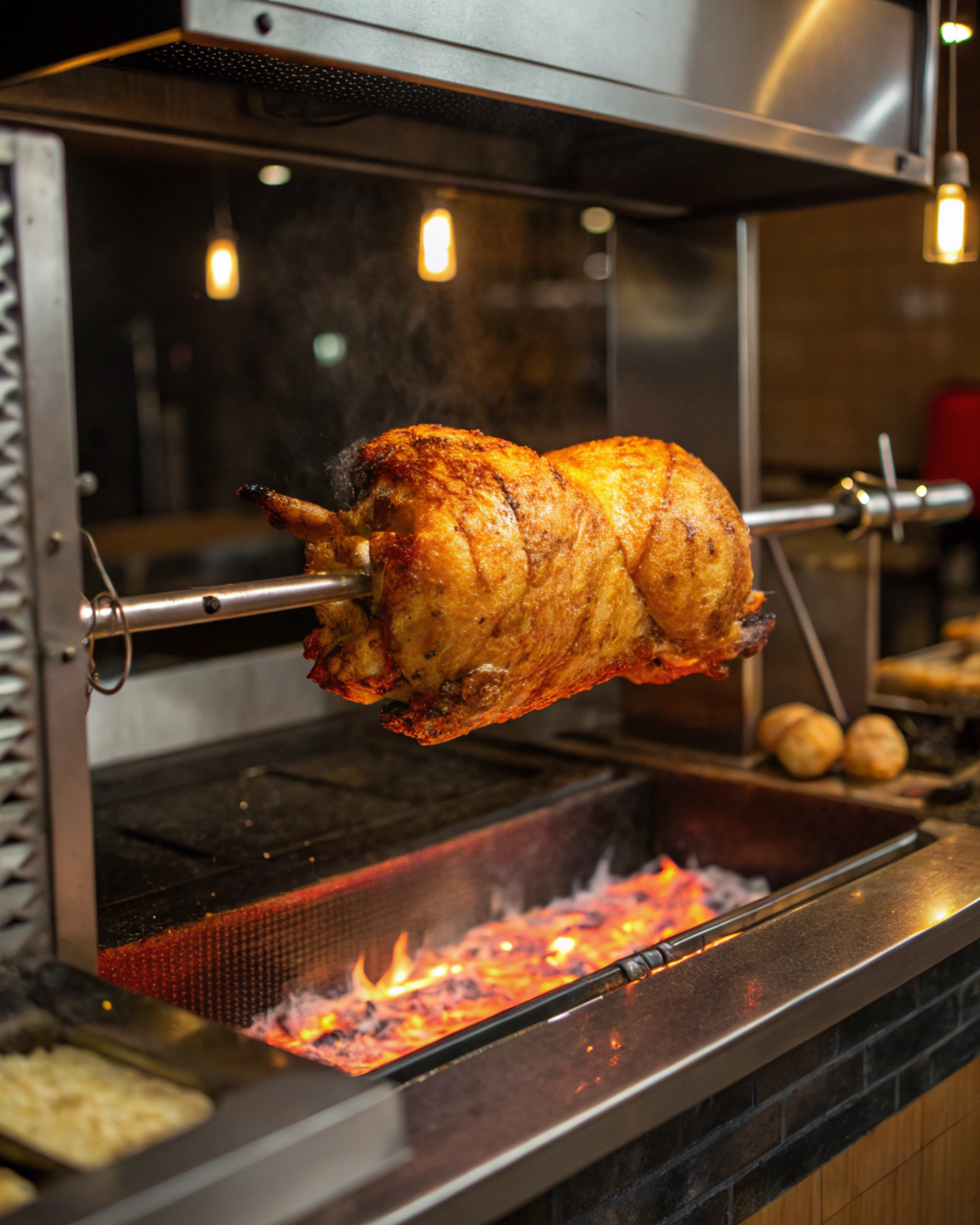
Oven Rotisserie:
- Use a rotisserie attachment for your oven if available. Preheat the oven to 375°F (190°C) and cook until internal temperature reaches 165°F (74°C).
- Ideal for year-round cooking, especially in cold weather or when outdoor grilling isn’t an option.
Outdoor Grill Rotisserie:
- Securely attach a rotisserie spit to your outdoor grill with a sturdy motor. Maintain a medium heat, around 350-400°F (175-200°C).
- Use wood chips or chunks alongside your grill fire for added smoky flavor.
Rotisserie on a Smoker:
- Combine rotisserie cooking with smoking for a unique blend of textures and smoky flavor. Maintain low and slow smoking temperatures, about 225-250°F (107-121°C), until fully cooked.
- Ideal for southern-style, smoky chicken with intense flavor.
Vertical Smoker or Pellet Smoker:
- Use specialized rotisserie attachments built for vertical smokers or pellet grills for optimal circulation and flavor.
Tandoori-Style:
- Marinate chicken in yogurt-based tandoori masala, then cook on the rotisserie for a flavorful, deeply spiced result reminiscent of Indian cuisine.
For more delicious poultry recipes, check out our Homemade Popcorn Chicken — a crispy, flavorful alternative perfect for snacking or main dishes.
Serving and Pairing Ideas for Chicken Rotisserie
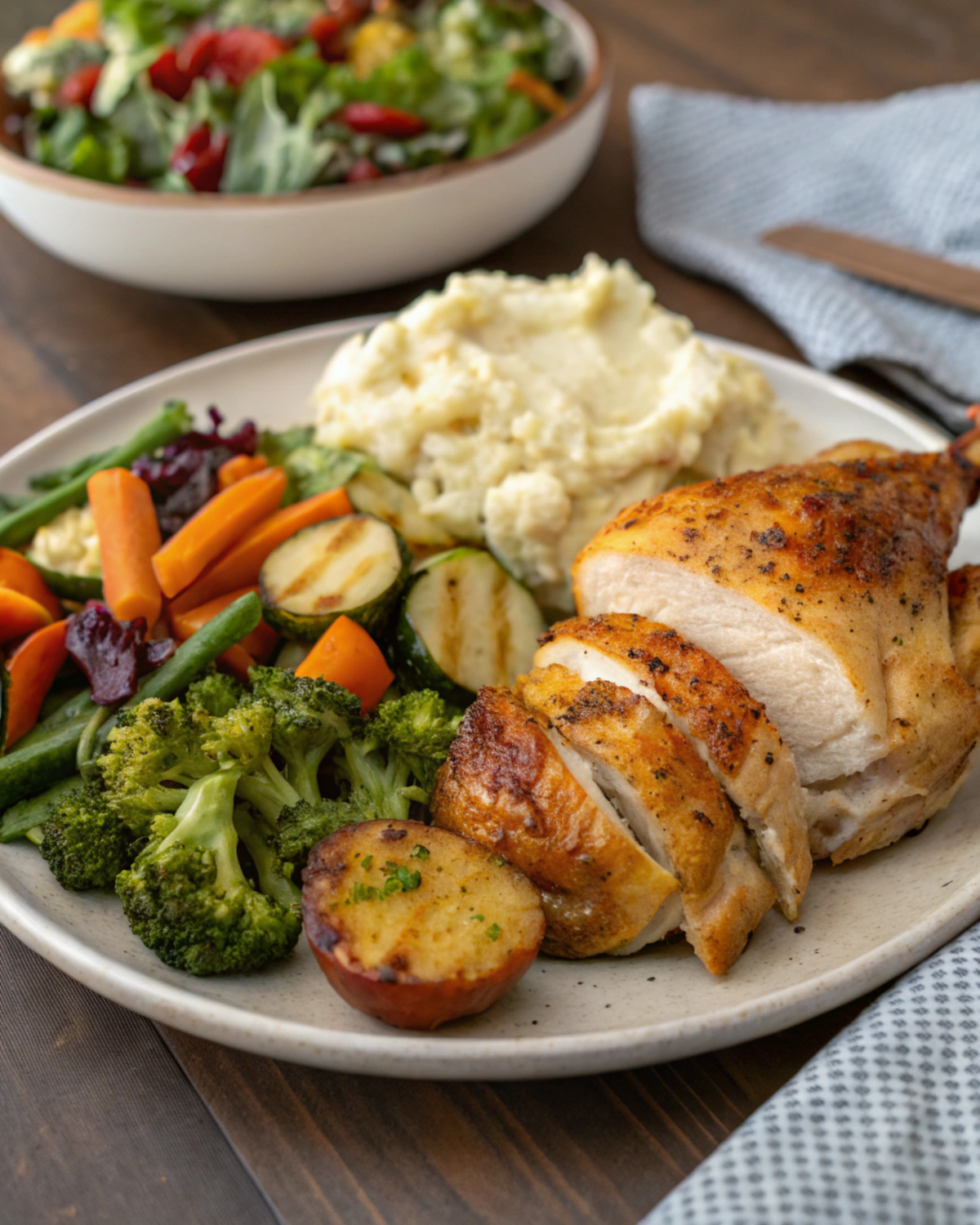
A perfectly cooked chicken rotisserie is incredibly versatile and pairs seamlessly with a variety of sides, sauces, and beverages, allowing you to tailor your meal to any occasion—be it casual, festive, or elegant.
Vegetable Sides:
- Roasted Vegetables: Carrots, Brussels sprouts, parsnips, or bell peppers tossed in olive oil, garlic, and herbs, roasted until caramelized.
- Grilled Asparagus or Green Beans: Lightly seasoned and grilled to add smoky flavor and crisp texture.
- Sautéed Greens: Spinach, kale, Swiss chard, or Swiss chard sautéed with garlic and a splash of lemon juice for a nutritious complement.
- Corn on the Cob: Grilled or boiled, topped with chili lime butter for a burst of flavor.
Starches:
- Creamy Mashed Potatoes: Clover the chicken with buttery, smooth mashed potatoes combined with herbs or roasted garlic.
- Roasted Sweet Potatoes: Cubed and roasted with a dash of cinnamon and honey for a sweet contrast.
- Crispy Roast Potatoes: Tossed in herbs and olive oil, roasted till golden.
- Crusty Bread or Dinner Rolls: Perfect for soaking up juices or making sandwiches with leftover meat.
- Rice Pilaf or Quinoa: Light, fluffy grains seasoned with herbs and vegetables serve as a hearty, healthful side.
Fresh and Flavorful Salads:
- Green Salad: Crisp lettuce, arugula, or mixed greens with cherry tomatoes, cucumbers, and a vinaigrette.
- Coleslaw: Classic or spicy, creamy or vinegar-based, adding crunch and tang.
- Mediterranean Tabbouleh: Parsley, bulgur, tomatoes, cucumbers, lemon juice, and olive oil for a fresh, herbaceous option.
- Fruit Salad: Mix of melons, berries, or citrus segments for a refreshing, sweet counterpoint.
Delicious Sauces:
- Classic Gravy: Rich and smooth, perfect for drizzling over carved chicken and mashed potatoes.
- Chimichurri: Bright, tangy Argentinian sauce made with parsley, garlic, vinegar, and olive oil; excellent with grilled chicken.
- Tzatziki: Yogurt-based cucumber and garlic sauce adding coolness and creaminess.
- Tangy Barbecue Sauce: Sweet or smoky varieties for a bold, savory finish.
- Herb Yogurt Dip: Mix Greek yogurt with herbs for a fresh, cooling accompaniment.
Beverage Pairings:
- Wine: Light, crisp white wines like Sauvignon Blanc, Chardonnay (preferably unoaked), or dry Riesling enhance the flavors without overpowering.
- Beer: A cold pilsner, pale ale, or wheat beer pairs well with the smoky and savory notes.
- Non-Alcoholic: Refreshing iced tea, lemonade, or sparkling water infused with citrus and herbs provide a delightful, palate-cleansing beverage option.
- Festive Touch: Serve with a sparkling cider or a light rosé for special occasions.
Presentation Tips:
- Arrange sliced chicken on a large platter garnished with fresh herbs, lemon wedges, or grilled citrus slices.
- Serve family-style with bowls of sauces and side dishes for a communal, inviting meal.
- Use colorful vegetables and garnishes to add visual appeal and excitement to your plating.
Interested in light, healthy meals? Explore our Healthy Lettuce Wraps for a nutritious, low-carb option
Storing and Reheating Ideas for chicken rotisserie
Leftover rotisserie chicken can be stored safely in an airtight container in the refrigerator for up to 3 days. For longer storage, freeze it in portions for up to 3 months. When reheating, the goal is to retain moisture and crispiness:
- Reheating in the Oven:
Preheat to 350°F (175°C). Place chicken on a baking sheet, tent with foil to prevent drying out, and heat for about 15-20 minutes or until warmed through. - Microwave Method:
Suitable for short-term reheating; arrange pieces in a microwave-safe dish, cover with a damp paper towel, and heat in short intervals until hot. Be cautious of potential moisture loss. - Skillet Reheat:
For crispy skin, reheat in a skillet over medium heat, turning frequently until heated through.
Avoid reheating at very high temperatures or for too long, as this can dry out the meat and compromise texture.
For tasty plant-based sides, try our Grilled Vegetables as a perfect pairing for any main dish.
FAQs about Chicken Rotisserie
Q: What is the best type of chicken for Chicken Rotisserie?
A: Fresh, high-quality whole chicken, preferably organic or free-range, produces the most flavorful and tender chicken rotisserie.
Q: How long does it take to cook chicken rotisserie?
A: Typically between 1.5 to 2 hours at 350°F (175°C), but always verify doneness with a meat thermometer, ensuring an internal temperature of 165°F (74°C).
Q: Can I make certain modifications on Chicken Rotisserie to suit my dietary preferences?
Absolutely! Chicken rotisserie is highly adaptable. You can use low-sodium seasonings, remove skin for lower fat content, or marinate with allergen-free ingredients to cater to dietary needs. Customizing flavors with herbs, spices, or citrus also allows you to create variations that align with your preferences.
Q: What are some tips for achieving crispy skin on my chicken rotisserie?
Dry the chicken thoroughly before seasoning, as excess moisture prevents crispiness. Applying a light coat of oil or melted butter before roasting enhances browning. Also, cook at a consistent medium heat and avoid overcrowding to ensure dry heat circulates well around the skin.
Q: Can I cook a stuffed chicken on the rotisserie?
While technically possible, stuffing a whole chicken may impact cooking time and safety. If you choose to do so, ensure the stuffing reaches an internal temperature of 165°F (74°C), and be prepared for longer cooking times. Otherwise, it’s safer to cook stuffing separately.
Q: How do I know my chicken rotisserie is cooked properly?
Use a reliable meat thermometer inserted into the thickest part of the thigh—away from the bone—to check for an internal temperature of 165°F (74°C). Juices should run clear when pierced, and the meat should be firm but tender.
Craving cozy, hearty meals? Our Steak with Mushroom Sauce pairs beautifully with roasted vegetables or mashed potatoes
Final Thoughts on chicken rotisserie
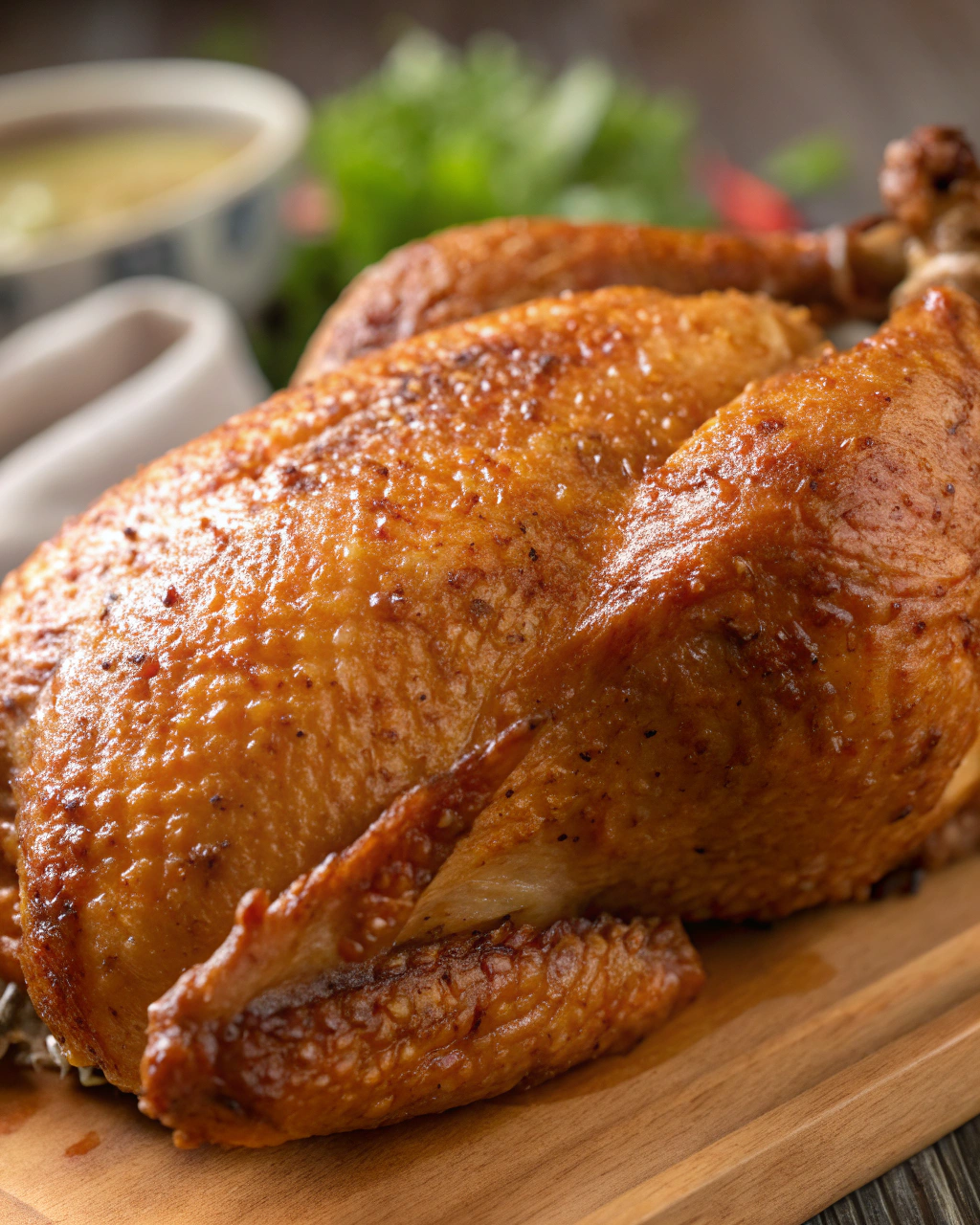
A perfectly cooked chicken rotisserie is more than just a delicious meal—it’s a showcase of simple techniques delivering maximum flavor and tenderness. Its versatility makes it suitable for any occasion, from casual weeknight dinners to festive gatherings. With a few quality ingredients, proper preparation, and attention to detail, you can elevate this classic dish from a restaurant favorite to a staple in your home kitchen. Not only is it satisfying and flavorful, but it also offers healthier eating benefits by reducing added fats and preserving nutrients. So, gather your ingredients, fire up your rotisserie, and enjoy the irresistible allure of homemade chicken rotisserie today!
Want to try different cooking methods? Discover how to make delicious Baked Parmesan Chicken for a crispy, oven-baked alternative.
For more exciting breakfast ideas or variations on traditional dishes, be sure to check out our Ultimate Guide to Breakfast and Sausage Cream Cheese Tater Tot Breakfast Casserole recipe for more inspiration and deliciousness in your morning routine! Happy cooking!
Explore More Delicious Recipes
Interested in more citrusy and fruity desserts? Check out this ultimate lemon cake recipe for an extra-refreshing treat. For other baking inspiration, browse our full collection of dessert recipes.
Our Facebook page Ryanrecipes