
Cucumber and Feta Salads are bright, refreshing dishes that pair crisp, cooling cucumbers with tangy, salty feta for a flavor profile that’s light yet satisfying. Perfect for breakfast (as a savory companion to eggs or yogurt), a quick lunch, or a simple dinner side, these salads are prized for their speed, flexibility, and ability to complement heavier mains. They’re ideal in warm weather, travel well for picnics, and require minimal cooking — mostly chopping and tossing — which makes them a reliable go-to when you want something healthy, flavorful, and visually appealing with minimal fuss.
Why Choose This Cucumber and Feta Salads Recipe
- Health benefits: Cucumber and Feta Salads are low in calories, high in hydration (cucumbers are ~95% water), and deliver beneficial nutrients like vitamin K, potassium, and calcium from feta. With the right dressing and additions (olive oil, herbs, lemon), they provide heart-healthy monounsaturated fats and antioxidants.
- Taste: The contrast of cool cucumber, briny feta, and bright acid (lemon or vinegar) creates a balanced bite — crisp, creamy, salty, and zesty all at once.
- Ease of preparation: Most versions require no cooking. Prep time is mainly washing, slicing, and whisking a dressing, making the dish accessible to cooks of all skill levels.
- Versatility: Works as a standalone salad, side dish, mezze item, sandwich topping, or base for protein (chicken, fish, legumes). It accommodates many dietary patterns—vegetarian, gluten-free, low-carb.
- Cultural significance: Variants of cucumber-and-cheese salads appear throughout the Mediterranean and Middle East (e.g., Greek cucumbers with feta, Turkish cacık-like cucumber salads), connecting the dish to timeless, regional culinary practices centered on fresh produce and simple dressings.
For a sweet-savory pairing or a picnic menu, consider serving the salad alongside recipes with homemade blackberry jam.
Timing and Number of Portions
- Time of preparation: 10–20 minutes active prep (washing, chopping, crumbling, and dressing). If marinating for flavor, allow 15–30 minutes additional resting time.
- Time of resting/marinating (optional): 15–30 minutes.
- Time of serving: Serve immediately or within 2–3 hours for optimal texture; chilled versions are enjoyable after refrigeration.
- Number of portions: This basic recipe yields 4 servings as a side salad. Adjust quantities proportionally for more servings or to make it a main (add protein or grains).
Ingredients For Cucumber and Feta Salads
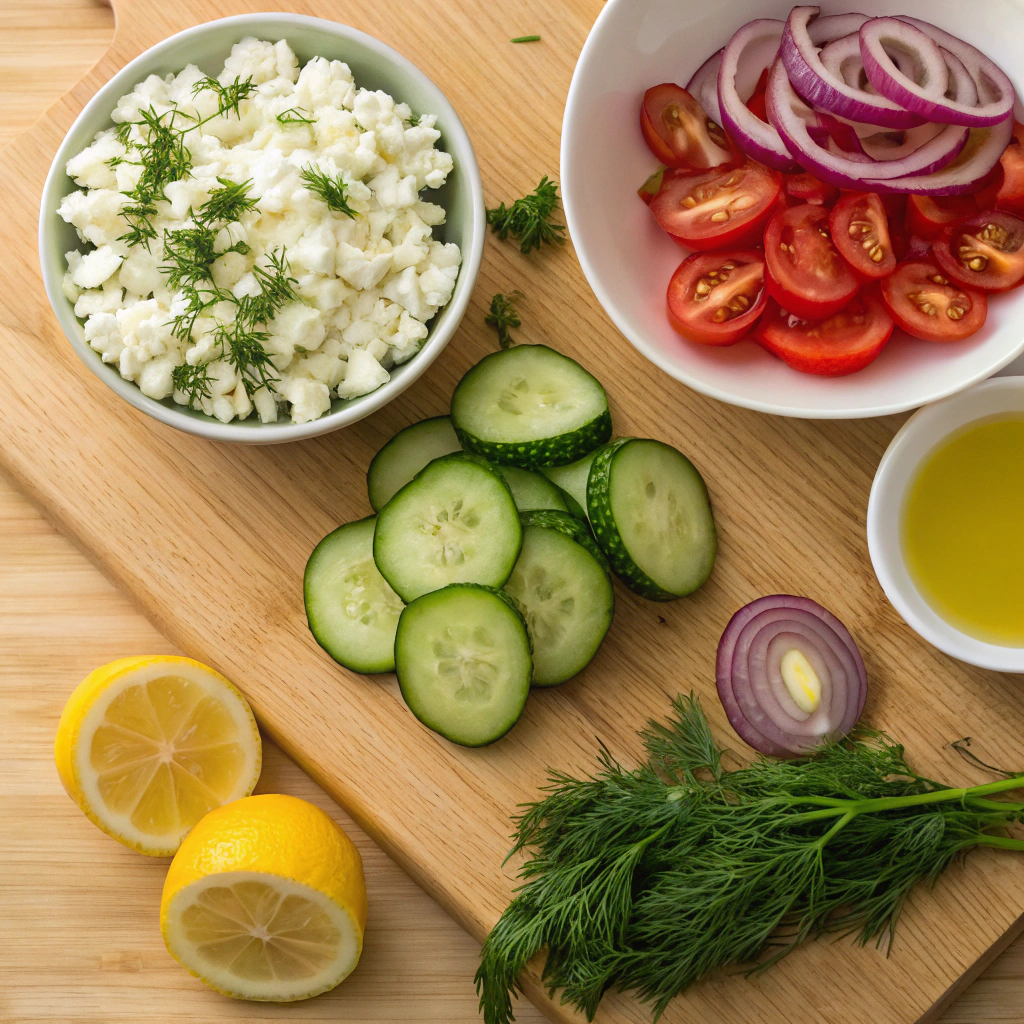
yields : 4 side portions
- Cucumbers — 2 medium (about 1.25–1.5 lb total). Prefer English (hothouse) or Persian cucumbers for thin skins and fewer seeds; if using regular slicing cucumbers (market/field), peel partially or fully and optionally scoop seeds for less wateriness.
- Feta cheese — 6 oz (about 170 g), crumbled. Choose block feta in brine for best texture and flavor — it’s firmer and more authentic than pre-crumbled versions. Sheep’s milk or sheep-goat blends (Greek feta) deliver richer flavor; goat’s milk feta is tangier.
- Red onion or sweet onion — 1/4 to 1/2 medium (about 1–2 oz), thinly sliced. Soak in cold water for 5–10 minutes to reduce sharpness if desired.
- Cherry or grape tomatoes (optional) — 1 cup halved (about 5 oz). Look for firm, glossy skins with no wrinkles.
- Fresh herbs — 1/4–1/3 cup chopped (about 1/2 oz) (dill, mint, or flat-leaf parsley are classic; combination works well). Choose bright green, fragrant leaves without wilting.
- Extra virgin olive oil — 3 tablespoons. Pick a fragrant, fruity oil for dressing.
- Lemon juice — 2 tablespoons fresh (about 1 medium lemon) or 1.5 tablespoons red/white wine vinegar for tang variation.
- Salt — 1/4 to 1/2 teaspoon (adjust to taste; feta is salty so be conservative).
- Freshly ground black pepper — 1/4 teaspoon.
- Optional: Kalamata olives — 1/3 cup pitted, halved; toasted nuts (pine nuts or walnuts) — 2 tablespoons; cucumber seeds removed or not depending on preference.
Tips on selection and substitutions:
- Cucumbers: English or Persian for best texture. If cucumbers taste bitter, cut off tips and test — bitterness is usually confined to the ends. For seedless and less watery results, choose smaller cucumbers or deseed.
- Feta: Buy a block in brine and drain/cube yourself. If unavailable, substitute with ricotta salata (milder) or crumbled goat cheese (tangier and creamier).
- Oil: Use a neutral oil only if you prefer less olive flavor. Extra virgin olive oil adds depth and authenticity.
- Acid: Lemon is bright and fresh; red wine vinegar is more fermented and savory; apple cider vinegar adds a mild fruity note.
- Dairy-free/vegan: Replace feta with firm tofu marinated in brine or a vegan feta alternative; add a pinch of kala namak (black salt) for an “eggy” tang if desired.
- Herbs: Dill and mint evoke Greek/Turkish styles; parsley gives a Mediterranean lift; chives or basil also pair well.
- Add-ins/substitutions: Cucumbers + avocado + feta for creaminess; cucumbers + cooked farro or quinoa to make it a more substantial main-course salad.
Step-by-Step Preparation for Cucumber and Feta Salads
This version is a simple Mediterranean-style cucumber and feta salad.
Prep:
- Wash and dry ingredients. Use a salad spinner for herbs and leafy components to remove excess water.
- Cucumbers:
- If using English/Persian cucumbers: slice into rounds (1/4-inch) or half-moons depending on presentation.
- If using larger slicing cucumbers: peel in alternating stripes or fully, cut lengthwise and scoop seeds with a spoon if watery, then slice.
- Onions: Slice very thin (mandoline or sharp knife). Soak for 5–10 minutes in cold water if you want milder onion flavor, then drain.
- Tomatoes: Halve cherry/grape tomatoes or dice larger tomatoes; drain excess juices to avoid soggy salad.
- Feta: Drain feta from brine, pat gently with paper towel, then crumble or cube. Large crumbles give texture contrast; small crumbles distribute salt more evenly.
- Herbs: Stack leaves, roll, and slice thinly (chiffonade) or roughly chop to desired size.
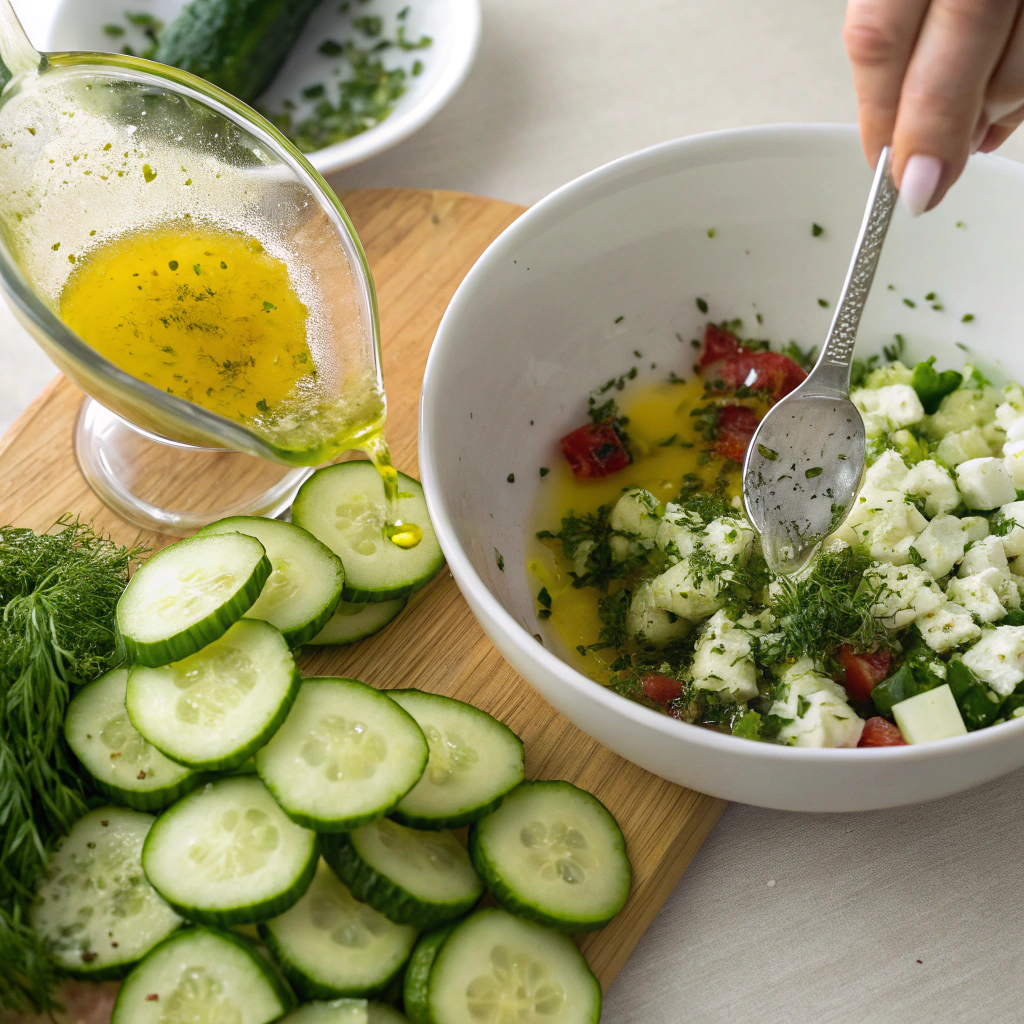
Dressing: 7. In a small bowl, whisk together 3 tablespoons extra virgin olive oil, 2 tablespoons fresh lemon juice (or 1.5 tbsp red wine vinegar), 1/4 teaspoon salt (adjust), and 1/4 teaspoon freshly ground black pepper. Optionally add 1/2 teaspoon Dijon mustard for emulsification and a teaspoon of honey for a touch of sweetness. 8. Taste and adjust acidity, salt, and sweetness: because feta is salty, start light on salt and increase only if needed.
Assembly: 9. Combine cucumbers, onion, tomatoes (if using), and herbs in a large bowl. 10. Pour the dressing over the vegetables and gently toss to coat. Add crumbled feta last and fold in gently so feta remains in chunks. 11. Let the salad rest 10–20 minutes at room temperature to meld flavors, or chill for 30 minutes for a colder salad. If chilling, wait until right before serving to add delicate herbs or crumbled feta to avoid them becoming waterlogged.
For adventurous flavor pairings, try a tiny drizzle of a homemade blackberry jelly and jam recipe on plated servings.
Common pitfalls and how to avoid them:
- Soggy salad: Drain tomatoes and pat cucumbers dry if they’re wet; don’t overdress — start with 2 tablespoons oil and add more only if needed.
- Too salty: Because feta adds salt, reduce added salt in dressing and taste before seasoning.
- Bitter cucumber: Remove ends and seeds if necessary; choose known-sweet varieties.
- Over-crumbling feta: Large crumbles make a nicer texture; don’t mash feta into the salad.
Finish the meal with a light dessert such as this easy peach crisp recipe for a seasonal contrast to the salad.
Tips and Self-Experience (Mistakes and Fixes) Best practices:
- Build seasoning gradually: Because cheese is salty, add salt in small increments and taste as you go.
- Keep cucumbers crisp: Chop and dress shortly before serving; if prepping ahead, keep cucumbers and dressing separate and toss just before serving.
- Use fresh lemon juice: Bottled lemon lacks brightness. If using vinegar, use high-quality red wine or white wine vinegar for a cleaner flavor.
- Tear herbs, don’t chop too fine: Large pieces deliver flavor pockets and a nicer mouthfeel.
- Textural contrast: Add toasted nuts or seeds (pine nuts, pumpkin seeds) for crunch. Add a crunchy element like cucumber skins left on or chopped celery if preferred.
- Balancing temperature: Serve chilled but not ice-cold — overly cold dulls flavors. 10–15 minutes chilled is ideal.
For a protein-packed twist, toss in chickpeas or try these easy chickpea salad recipes for more flavorful ideas.
Mistakes I’ve made and fixes:
- Over-salting: I once added salt before adding feta; fix is to add unsalted components first, taste, then adjust salted seasoning after cheese inclusion.
- Wilted herbs: Chopped herbs left in dressing became limp. Fix: add delicate herbs just before serving.
- Watery cucumbers: Pre-salting cucumbers to draw moisture is an option, but I found simply draining and patting them yields better texture without salting out the flavor.
Variations and Customizations
- Greek-style: Add Kalamata olives, red bell pepper, cucumber, tomatoes, oregano, and red onion; swap lemon for red wine vinegar.
- Creamy dill: Add 1/4 cup Greek yogurt or 2 tablespoons sour cream to dressing, chopped dill, and a little cucumber raita inspiration.
- Mediterranean grain bowl: Toss with 1–1.5 cups cooked quinoa, farro, or bulgur to make a hearty main.
- Protein additions: Grilled chicken, seared shrimp, canned chickpeas, or white beans make this a protein-forward meal.
- Spicy: Add thinly sliced jalapeño, red pepper flakes, or a drizzle of harissa-infused oil.
- Citrus twist: Use orange segments and a citrus-lemon vinaigrette for a sweeter profile.
- Middle Eastern: Add chopped mint, sumac, and a drizzle of pomegranate molasses for tangy-sweet complexity.
- Vegan: Replace feta with marinated tofu cubes or store-bought vegan feta; add a splash of brine or miso to mimic tang.
- Presentation: Serve in hollowed cucumber boats for individual portions, layered in a mason jar for picnics, or on toasted pita rounds for a mezze-style appetizer.
Serving and Pairing Ideas
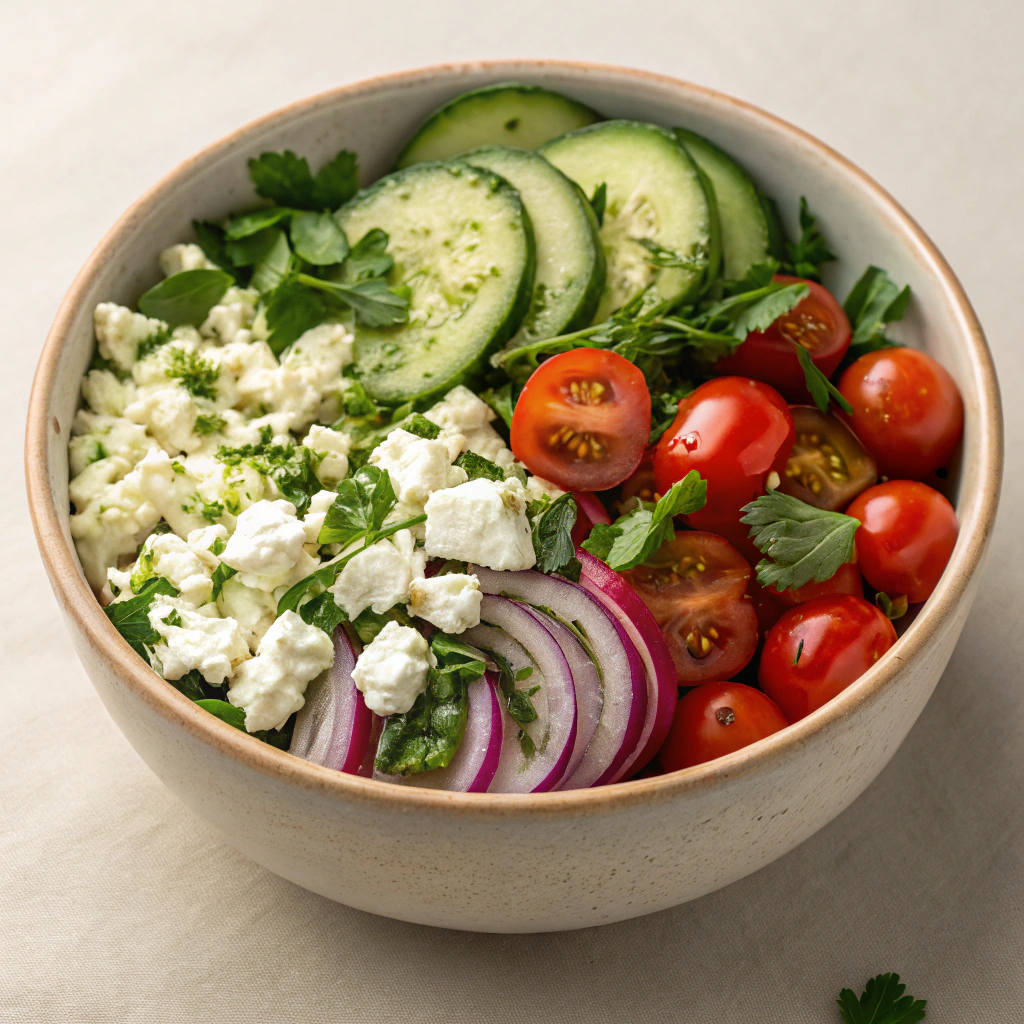
- Serve alongside grilled meats (lamb chops, chicken souvlaki, fish) to cut richness.
- Pair with hearty mains: falafel, gyros, roasted vegetables, or baked fish.
- Use as a topping: Spoon onto toasted bread for a Mediterranean bruschetta, or add to sandwiches and wraps.
- With breakfast: Serve as a cool, salty counterpoint to scrambled eggs or shakshuka.
- Wine pairing: Crisp, unoaked white wines like Sauvignon Blanc, Assyrtiko, or a dry rosé complement the salad’s acidity and saltiness.
- Non-alcoholic: Sparkling water with lemon or a lightly brewed iced tea balances the flavors.
Storing and Reheating Storage
- Short-term: Store in an airtight container in the refrigerator for up to 2 days. Cucumbers release moisture, so texture will soften over time.
- Best practice: If planning to store, keep dressing separate and add just before serving. Store feta in its brine or lightly covered with olive oil to maintain texture.
- Freezing: Not recommended. Cucumbers become mushy when frozen; feta’s texture may also degrade.
Reheating:
- This salad is served cold or at room temperature; do not reheat. If you add cooked grains or protein that you preheated, warm those separately and spoon the cold salad over them for a contrast of temperatures.
- If you must serve after refrigeration, remove from fridge 10–20 minutes before serving to let flavors bloom and reduce chill.
Meal prep tips for Cucumber and Feta Salads
Prep plan (makes 4 side servings / or 2 lunches)
- Prep time: 15–25 minutes
- Shelf life: 24–48 hours best (see storage notes)
Components to prep ahead (best results)
- Vegetables: Wash, dry, and slice cucumbers; halve cherry tomatoes; thinly slice onion. Store in airtight containers or zip bags lined with paper towel.
- Herbs: Chop and store in a small airtight container with a damp paper towel to keep fresh.
- Feta: Crumble and store separately in a small airtight container; keep a little of the brine or a splash of olive oil to preserve texture.
- Dressing: Whisk vinaigrette (olive oil + lemon juice/red wine vinegar + mustard + pepper) and store in a jar. Shake before use.
Assembly strategy
- Option A (best texture): Pack cucumbers, onions, tomatoes, herbs, feta, and dressing in separate containers. Toss just before eating.
- Option B (quick grab-and-go): Combine cucumbers, onions, and herbs in container; keep feta and dressing separated and add within a few hours of eating.
Containers & portions
- Use airtight meal prep containers with divided sections or multiple small containers (1–2 cup capacity for salad; 2–4 oz containers for dressing/feta).
- Mason jars work well: place dressing on bottom, sturdier veg next, delicate herbs and feta on top; shake into a bowl when ready.
If you’re planning a full menu, pair the salad with a selection from this easy homemade desserts roundup.
FAQs about Cucumber and Feta Salads
Q: How do I make a basic Cucumber and Feta Salad?
A: Cucumber and Feta Salads combine sliced cucumbers, crumbled feta, chopped herbs, olive oil, and lemon or vinegar; toss and season to taste.
Q: Can Cucumber and Feta Salads be made ahead?
A: Cucumber and Feta Salads can be partially made ahead—keep cucumbers and dressing separate and combine within 30–60 minutes of serving to avoid sogginess.
Q: How long do Cucumber and Feta Salads stay fresh?
A: Cucumber and Feta Salads stay best 24–48 hours refrigerated if mixed, but texture declines; storing components separately extends freshness.
Q: Are Cucumber and Feta Salads healthy?
A: Cucumber and Feta Salads are generally healthy—low in calories and hydrating, with vitamins and healthy fats from olive oil; watch feta and oil amounts for sodium/calorie control.
Q: Can I make Cucumber and Feta Salads vegan?
A: Cucumber and Feta Salads can be made vegan by substituting marinated tofu or a plant-based feta alternative and using the same dressing.
Q: What herbs work best in Cucumber and Feta Salads?
A: Cucumber and Feta Salads work best with dill, mint, parsley, or basil—dill and mint give the most traditional Mediterranean/Turkish flavor.
Q: How do I prevent Cucumber and Feta Salads from becoming soggy?
A: Cucumber and Feta Salads stay crisp if you drain tomatoes, pat cucumbers dry, and add dressing only shortly before serving.
Q: Can I add protein to Cucumber and Feta Salads?
A: Cucumber and Feta Salads easily accept proteins like grilled chicken, shrimp, canned chickpeas, or cooked quinoa to make a more substantial meal.
Q: What dressing is best for Cucumber and Feta Salads?
A: Cucumber and Feta Salads are best with a simple vinaigrette of extra virgin olive oil, fresh lemon juice or red wine vinegar, salt, and pepper; Dijon or honey are optional.
Q: Can Cucumber and Feta Salads be frozen?
A: Cucumber and Feta Salads should not be frozen—cucumbers become mushy and feta’s texture degrades; consume fresh or refrigerate short-term.
Final Thoughts
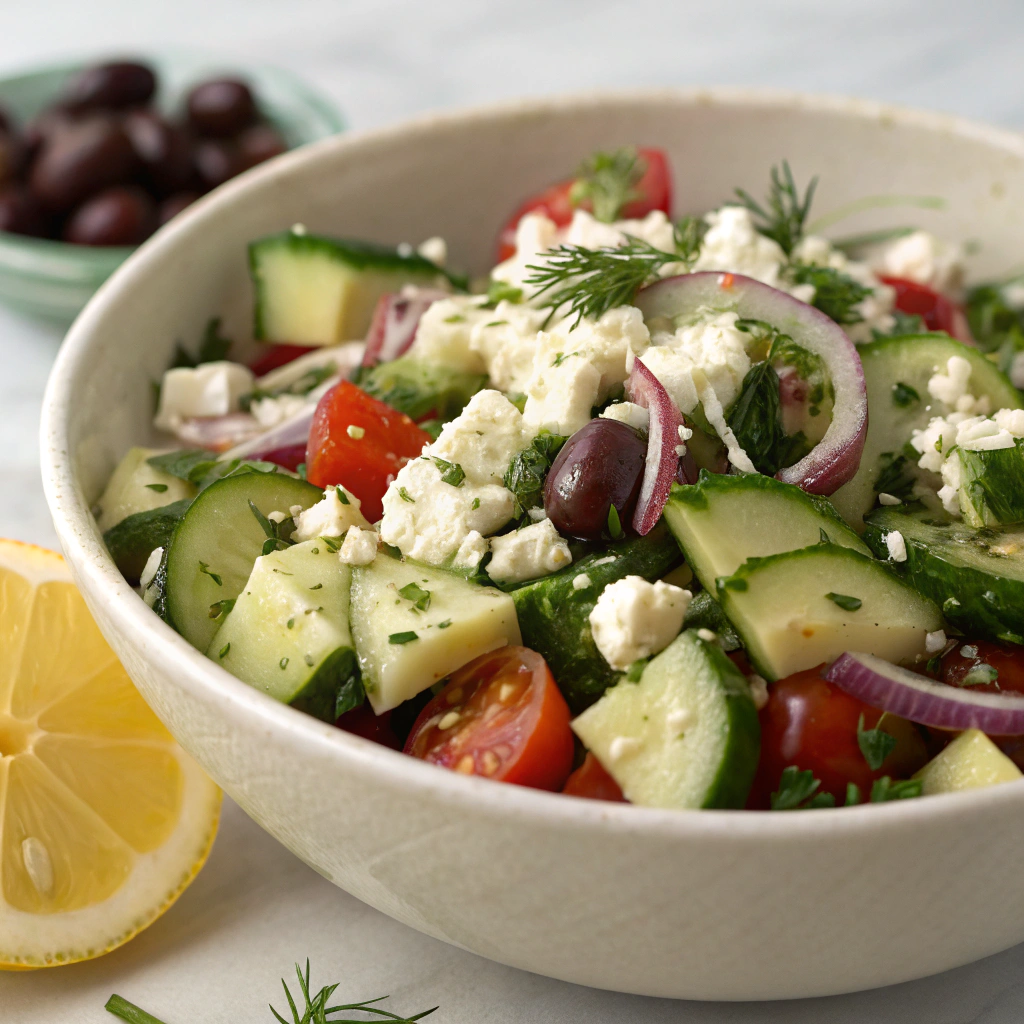
Cucumber and Feta Salads are a simple, adaptable, and nutritious addition to any meal rotation — proof that fresh ingredients and basic techniques can yield exceptional flavor. Whether you want a light side for grilled meats, a quick vegetarian lunch, or a refreshing dish to brighten a weeknight table, this salad delivers. Try the core recipe as written, then experiment with herbs, proteins, or grains to make it your own. With minimal prep and maximum return on flavor and health, Cucumber and Feta Salads deserve a regular spot in your kitchen.
For more delicious baking inspiration, come join us on Facebook at RyanRecipes. Follow us to stay updated with our latest creations and share your culinary adventures with our vibrant community!
1 thought on “Fresh & Bright Cucumber and Feta Salads — Quick, Zesty Mediterranean Favorite”