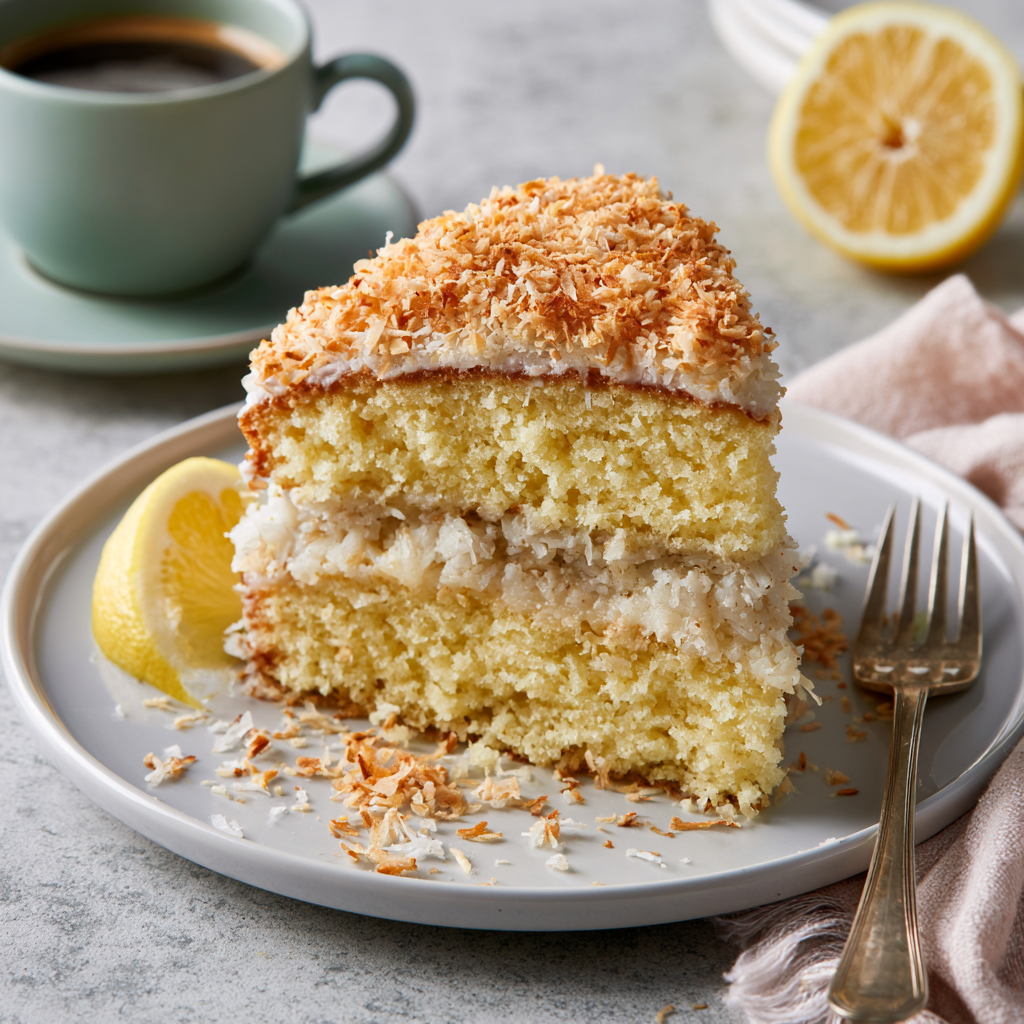
Portuguese Coconut Celebration Cake is a tender, moist, and fragrant layer cake that combines the tropical sweetness of shredded coconut with the buttery richness of a classic Portuguese-style sponge. Traditionally served at birthdays, holidays, and family gatherings, this cake balances simplicity and elegance, making it perfect for breakfast with coffee, a midday treat, or a celebratory dessert after dinner. Its light crumb, coconut-infused batter, and optional glaze or frosting make it versatile and crowd-pleasing. This recipe offers an accessible route to an impressive cake that’s easy to scale, customize, and enjoy across meals and occasions.
Why Choose This Portuguese Coconut Celebration Cake Recipe
- Flavor and texture: The cake delivers a delicate crumb and pronounced coconut aroma without being overwhelmingly sweet; it pairs well with citrus, coffee, or richer frostings.
- Versatility: Works as breakfast cake, afternoon tea, or a festive dessert. You can keep it simple or decorate for celebrations.
- Ease of preparation: Uses pantry-friendly ingredients and straightforward techniques — suitable for novice and experienced bakers.
- Make-ahead friendly: Holds up well for a day or two and freezes nicely, which is convenient for planning events.
- Cultural appeal: Inspired by Portuguese baking sensibilities—light sponge textures and simple, bright flavorings—this cake offers a taste of Iberian home-baking with tropical coconut added for interest.
- Health-conscious adaptions: Can be adjusted for lower sugar, whole-grain flours, or dairy alternatives while retaining great texture.
Timing and Number of Portions
- Preparation time: 20–30 minutes (mixing, preparing pans).
- Baking time: 25–35 minutes (for 9-inch round pans or a loaf pan; see notes).
- Cooling and finishing: 30–60 minutes (cooling, optional simple glaze or frosting, and decorating).
- Total time: Approximately 1 hour 15 minutes to 2 hours, depending on cooling and decoration choices.
- Yield / portions: Makes one 9-inch layer cake (cut into 10–12 slices) or one 9×5-inch loaf (8–10 slices). For a two-layer 9-inch celebration cake, double the recipe to serve 18–24.
Ingredients For Portuguese Coconut Celebration Cake

Base cake ingredients
- All-purpose flour — 2 1/2 cups (312 g). Choose unbleached flour for a purer flavor and slightly better texture. For a lighter sponge, you can substitute 1/2 cup (60 g) cake flour minus 1 tablespoon with adjustment or use 2 1/3 cups (280 g) cake flour.
- Granulated sugar — 1 1/2 cups (300 g). Use fine granulated sugar (baker’s sugar) for even integration. For a less-sweet version, reduce to 1 1/4 cups (250 g).
- Baking powder — 2 teaspoons. Ensure it’s fresh (test by placing a pinch in hot water: it should bubble).
- Salt — 1/2 teaspoon. Balances sweetness and enhances flavor.
- Unsalted butter — 1 cup (226 g), softened. Choose high-quality butter for better flavor; if using salted, reduce added salt by 1/4 teaspoon.
- Eggs — 4 large, at room temperature. Room-temp eggs incorporate more easily and trap air for a lighter cake.
- Whole milk — 1/2 cup (120 ml). Use whole or 2% for richness; coconut milk can be used for extra coconut flavor (see substitutions).
- Vanilla extract — 2 teaspoons. Pure vanilla yields the best flavor; alternatives include vanilla paste for intensified aroma.
- Fresh lemon zest — 1 tablespoon (from 1 medium lemon). Optional but recommended to brighten flavors and cut richness.
Coconut elements
- Sweetened shredded coconut — 1 1/2 cups (135 g). For chewier texture, use larger-flaked sweetened coconut; for drier texture and lighter sweetness, use unsweetened shredded coconut and increase sugar slightly.
- Toasted coconut (optional, for topping) — 1/2 cup (45 g). Toast until golden for crunch and aroma.
Simple syrup or soak (optional, for extra moistness)
- Water — 1/4 cup (60 ml)
- Granulated sugar — 2 tablespoons
- Rum or coconut liqueur (optional) — 1 tablespoon. Dissolve sugar in warm water and add alcohol if desired. Brush on cake layers for extra moisture and flavor.
Glaze or frosting (options)
- Powdered sugar glaze: Powdered sugar — 1 1/2 cups (180 g), milk or coconut milk — 2–3 tablespoons, vanilla — 1/2 teaspoon.
- Coconut buttercream: Unsalted butter — 1/2 cup (113 g) softened, powdered sugar — 2 cups (240 g), coconut milk — 2–3 tablespoons, shredded coconut — 1/4 cup (22 g).
- Cream cheese frosting: Cream cheese — 8 oz (226 g), unsalted butter — 1/4 cup (57 g), powdered sugar — 2 cups (240 g), vanilla — 1 teaspoon.
Substitutions and notes
- Flour: For gluten-free, use a 1:1 gluten-free flour blend with xanthan gum or a specialized cake flour replacement; expect slightly different crumb.
- Sugar: Coconut sugar or light brown sugar works but will change color and flavor. For lower-sugar needs, use erythritol blends formulated for baking (follow package exchange ratio).
- Butter: Replace with neutral oil (canola, vegetable) 3/4 cup (180 ml) for a moister crumb; note that oil yields denser texture. For dairy-free, use vegan butter or coconut oil (solid, cooled) but be mindful of coconut flavor intensification.
- Milk: Use full-fat canned coconut milk for a richer coconut flavor (shake well) or almond milk for a lighter taste.
- Eggs: For vegan alternatives, use 1/4 cup unsweetened applesauce or mashed banana per egg with 1/2 teaspoon baking powder extra per egg replacement—results vary.
Explore more recipes and meal ideas—try our Easy Father’s Day Cake for celebrations, browse Wednesday Night Suppers, find quick family meal ideas, discover Quick & Delicious Family Meal Ideas, bake the Must-Try Coffee Cake Recipes, or pair with Homemade Salsa Recipes
Step-by-Step Preparation For Portuguese Coconut Celebration Cake

Before you start
- Preheat oven to 350°F (177°C).
- Prepare pans: For a 9-inch round pan, grease with butter and line the bottom with parchment; flour lightly. If making two layers, prepare two 9-inch pans. For a loaf, grease and flour a 9×5-inch pan.
Dry ingredients
- Whisk together 2 1/2 cups all-purpose flour, 2 teaspoons baking powder, and 1/2 teaspoon salt in a medium bowl. Sift or whisk thoroughly to aerate and ensure even leavening.
Creaming and wet ingredients
2. In a large mixing bowl, cream 1 cup (226 g) softened unsalted butter with 1 1/2 cups (300 g) granulated sugar until pale and fluffy, about 3–5 minutes using a hand mixer or stand mixer on medium speed. Proper creaming traps air that helps achieve a light crumb.
3. Add eggs one at a time, beating well after each addition. Scrape down the bowl to keep mixture uniform. Add 2 teaspoons vanilla and 1 tablespoon lemon zest. If using whole milk, warm slightly to room temperature and set aside.
Combining
4. Add the dry and wet ingredients alternately: with the mixer on low, add one-third of the dry flour mixture, then half the milk, another third of the flour, remaining milk, and finish with the last third of flour. Mix just until combined — overmixing develops gluten and yields toughness.
5. Fold in 1 1/2 cups (135 g) shredded coconut with a spatula until evenly distributed. If you like pockets of textured coconut, fold less vigorously. For more intense coconut flavor, fold in 1/4 cup (60 ml) coconut milk or replace the milk amount with coconut milk.
Baking
6. Pour batter into prepared pan(s), smoothing the top. Tap pan gently on counter to remove large air pockets. If making two layers, divide evenly using a kitchen scale or measuring cups.
7. Bake in preheated oven: 25–30 minutes for 9-inch rounds, 50–60 minutes for a 9×5-inch loaf. Check doneness by inserting a toothpick—when it comes out with a few moist crumbs (not wet batter), it’s done. Avoid overbaking to keep the cake moist.
Cooling and finishing
8. Let the cake cool in the pan for 10–15 minutes, then invert onto a wire rack to cool completely. If using a simple syrup, brush the warm cakes lightly to add moisture and flavor.
9. Prepare your glaze or frosting while cake cools. For powdered sugar glaze, whisk 1 1/2 cups powdered sugar with 2–3 tablespoons milk until pourable; drizzle across the cooled cake and immediately sprinkle toasted coconut if using. For layered cakes, spread frosting between layers, then crumb-coat and chill before final frosting.
Presentation
10. Garnish with toasted coconut, lemon zest, or thin coconut flakes. Serve at room temperature for best texture and flavor.
Tips and Self-Experience Ideas For Portuguese Coconut Celebration Cake

Best practices
- Use room-temperature ingredients (butter, eggs, milk) to emulsify properly and build structure. Cold ingredients cause batter to split or bake unevenly.
- Measure flour correctly: spoon flour into the cup and level with a knife rather than scooping directly to avoid dense cakes. Prefer weighing flour when possible.
- Don’t overmix after adding flour — mix until just combined to prevent a tough crumb.
- Check oven temperature with an oven thermometer; many ovens run hot or cold, affecting bake time.
- Rotate pans halfway through baking if your oven has hot spots.
Common mistakes and fixes
- Dense or heavy cake: Cause — overmixing, too much flour, or cold eggs/butter. Fix — ensure proper measuring, mix gently, and bring ingredients to room temperature.
- Dry cake: Cause — overbaking or insufficient fat/liquid. Fix — reduce baking time, brush with simple syrup after baking, or increase fat (use oil or extra butter) slightly.
- Soggy bottom: Cause — underbaked center or using too much syrup. Fix — bake until toothpick shows only moist crumbs; apply syrup sparingly.
- Sunken center: Cause — opening oven door early, excess leavening, or batter too light. Fix — avoid disturbing cake while baking, check leavening amounts, and ensure correct oven temp.
- Coconut sinks to the bottom: Cause — large flakes and heavy batter. Fix — toss shredded coconut with a tablespoon of flour before folding in to suspend it.
Personal tips (from repeated baking)
- Toast a portion of shredded coconut and reserve some untoasted for folding into batter; the contrast of toasted topping and softer interior is delightful.
- For celebrations, make a simple coconut-lime curd to layer between cake tiers. The acidity elevates the coconut and cuts sweetness.
- If you prefer a less sweet experience for breakfast, skip frosting and do a light dusting of powdered sugar or a thin glaze.
Variations and Customizations Ideas For Portuguese Coconut Celebration Cake

Flavor additions
- Citrus twist: Add lime or orange zest instead of lemon for a different bright note; add 1–2 tablespoons juice to the glaze.
- Tropical fruits: Fold in 1/2–3/4 cup finely chopped fresh pineapple or mango (lightly drained) for a fruit-forward cake. Adjust sweetness as needed.
- Chocolate drizzle: Melt semi-sweet chocolate and drizzle on top; coconut and chocolate are a classic pairing.
- Almond coconut: Replace 1/4 cup flour with 1/4 cup almond flour for a nutty depth.
Dietary adaptations
- Gluten-free: Use a 1:1 gluten-free flour blend and add 1/4 teaspoon xanthan gum if your blend lacks it. Expect slightly denser cake.
- Vegan: Use plant-based butter, aquafaba (3 tablespoons per egg) or commercial egg replacer, and full-fat coconut milk. Bake slightly longer and monitor for doneness.
- Lower sugar: Reduce sugar to 1 cup (200 g) and enhance flavor with extra vanilla and citrus zest. Use a glaze made with less sugar.
Presentation and serving styles
- Layered celebration cake: Double recipe for two 9-inch layers; use coconut buttercream or cream cheese frosting, decorate edges with toasted coconut.
- Bundt-style: Use a bundt pan, increase baking time accordingly, and invert to reveal decorative shape. Glaze and sprinkle coconut on top.
- Cupcakes: Make mini versions; bake 18–24 cupcakes at 18–22 minutes and top individually.
Serving and Pairing Ideas For Portuguese Coconut Celebration Cake
- Beverages: Pairs beautifully with strong coffee, espresso, black tea (assam or breakfast blends), or a citrusy Earl Grey. For an adult pairing, consider a light rum cocktail or a coconut liqueur spritz.
- Accompaniments: Serve with fresh berries, a dollop of whipped cream, or a spoonful of passion fruit curd for a tropical contrast. Coconut sorbet or vanilla ice cream also complements the texture.
- Meal timing: As breakfast — slice served with yogurt and fresh fruit; as brunch — alongside smoked salmon or a cheese board for contrast; as dessert — topped with cream cheese frosting and sliced almonds.
- Plating: For a celebration, pipe rosettes around the edge, add edible flowers, and finish with a sprinkle of toasted coconut for texture.
Storing and Reheating

Short-term storage
- Room temperature: Wrapped loosely in plastic wrap or in an airtight container, the cake will stay moist for 1–2 days. Keep frosting-covered cakes refrigerated (see below).
- Refrigerator: Store frosted cakes in an airtight container for up to 5 days. Let refrigerated cake come to room temperature before serving for best flavor.
Freezing
- Unfrosted layers: Wrap tightly in plastic wrap and foil; freeze for up to 2 months. Thaw overnight in the refrigerator then bring to room temperature before frosting.
- Frosted cake: You can freeze fully assembled frozen cakes (flash-freeze uncovered briefly, then wrap) but texture of frosting may change; best to freeze unfrosted.
Reheating
- For slices: Warm individual slices in a microwave for 10–15 seconds (for a moister, freshly-baked feel) or in a 300°F (150°C) oven wrapped loosely in foil for 8–10 minutes.
- For loaf: Reheat at 300°F (150°C) for 10–15 minutes in foil to avoid drying. Re-apply a light glaze or simple syrup if needed to restore moisture.
FAQs About Portuguese Coconut Celebration Cake
How do I keep my Portuguese Coconut Celebration Cake moist?
Portuguese Coconut Celebration Cake stays moist when you avoid overbaking, use room-temperature ingredients, and brush warm layers with simple syrup (or use oil in the batter).
Can I make Portuguese Coconut Celebration Cake gluten-free?
Portuguese Coconut Celebration Cake can be made gluten-free by using a 1:1 gluten-free flour blend with xanthan gum and adjusting bake time as needed.
Is Portuguese Coconut Celebration Cake suitable for vegans?
Portuguese Coconut Celebration Cake can be adapted for vegans using plant-based butter, coconut milk, and egg replacers (aquafaba or commercial egg replacer), though texture may differ.
How far in advance can I bake Portuguese Coconut Celebration Cake?
Portuguese Coconut Celebration Cake layers can be baked up to 2 days ahead refrigerated or frozen unfrosted for up to 2 months; frost and decorate on serving day.
What frosting pairs best with Portuguese Coconut Celebration Cake?
Portuguese Coconut Celebration Cake pairs well with cream cheese frosting, coconut buttercream, or a simple powdered sugar glaze with a touch of coconut milk.
How do I prevent shredded coconut from sinking in Portuguese Coconut Celebration Cake?
Portuguese Coconut Celebration Cake avoids sinking coconut by tossing shredded coconut with a tablespoon of flour before folding it into the batter and folding gently.
Can I use canned coconut milk in Portuguese Coconut Celebration Cake?
Portuguese Coconut Celebration Cake benefits from canned full-fat coconut milk as a substitute for regular milk to boost coconut flavor and richness.
How should I store leftover Portuguese Coconut Celebration Cake?
Portuguese Coconut Celebration Cake leftovers should be stored in an airtight container—frosted cakes refrigerated for up to 5 days; unfrosted layers wrapped and frozen for up to 2 months.
Why did my Portuguese Coconut Celebration Cake sink in the middle?
Portuguese Coconut Celebration Cake can sink due to opening the oven door early, excess leavening, or underbaking; avoid disturbing the cake and verify oven temperature.
Can I add fruit to Portuguese Coconut Celebration Cake?
Portuguese Coconut Celebration Cake accepts fruit additions—fold in drained pineapple or mango (½–¾ cup) or serve with fresh berries or passion fruit curd for contrast.
Final Thoughts
Portuguese Coconut Celebration Cake is an adaptable, flavorful cake that brings a touch of tropical brightness to traditional Portuguese-inspired baking. Its balance of light cake crumb and coconut texture makes it suitable for breakfasts, brunches, and celebratory desserts. With straightforward techniques, flexible ingredient swaps, and room for creative decorations, this cake is a reliable choice for both casual family gatherings and special events. Try the core recipe, then experiment with your favorite variations—citrus, tropical fruit, or different frostings—to craft a version that becomes your own signature celebration cake.
For more delicious baking inspiration, come join us on Facebook at RyanRecipes. Follow us to stay updated with our latest creations and share your culinary adventures with our vibrant community!
1 thought on “Portuguese Coconut Celebration Cake Moist Homemade Recipe & Serving Ideas”